Southwest Minnesota State University
Men's Swimming & Diving
Other Items
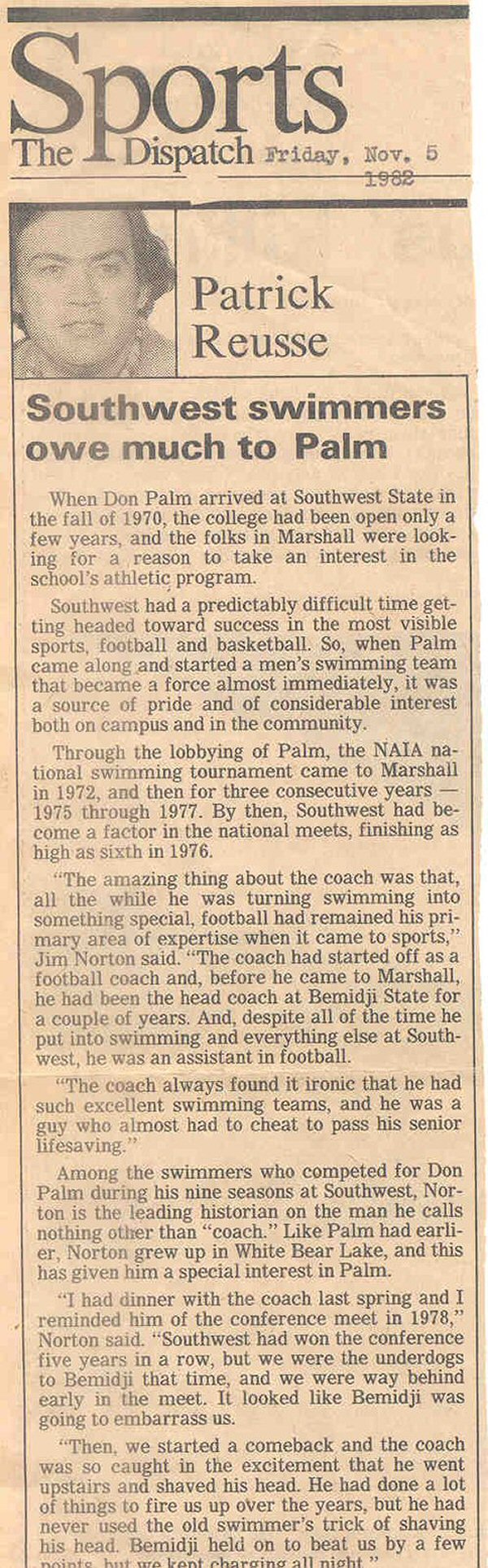
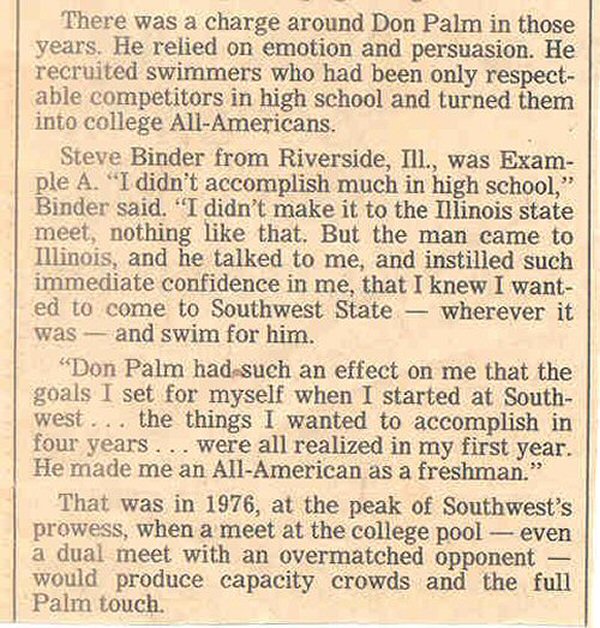
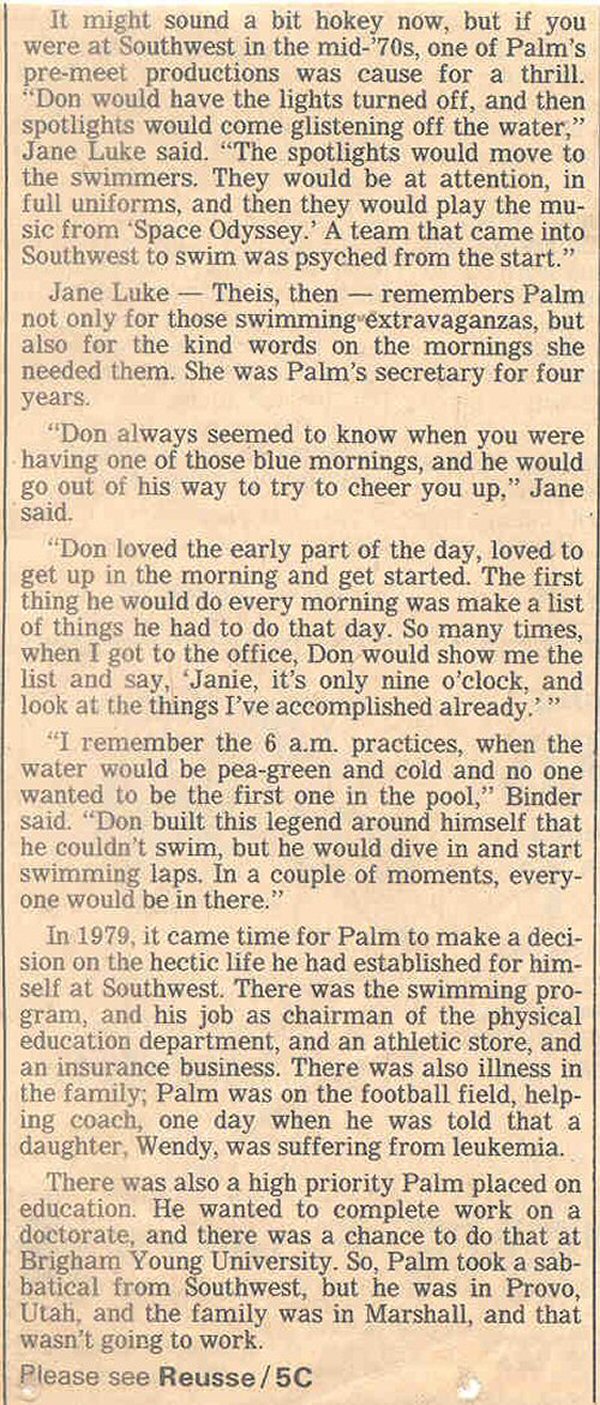
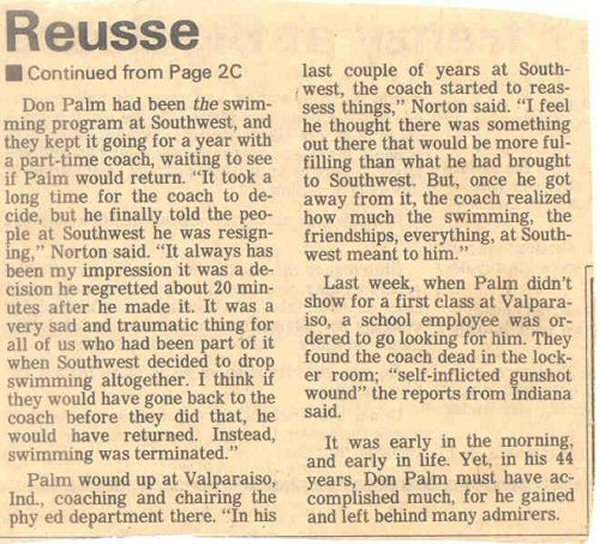
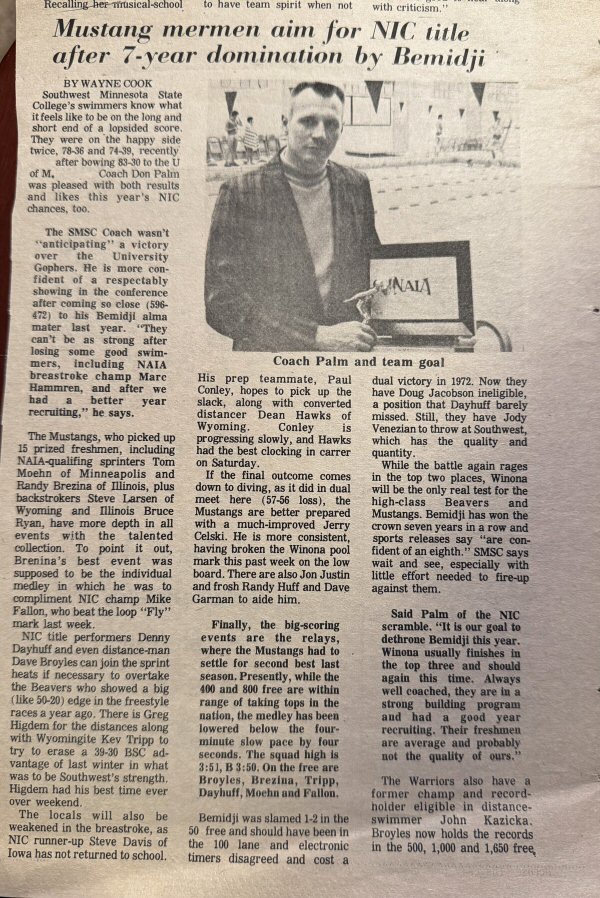
News Paper Article about Coach Palm
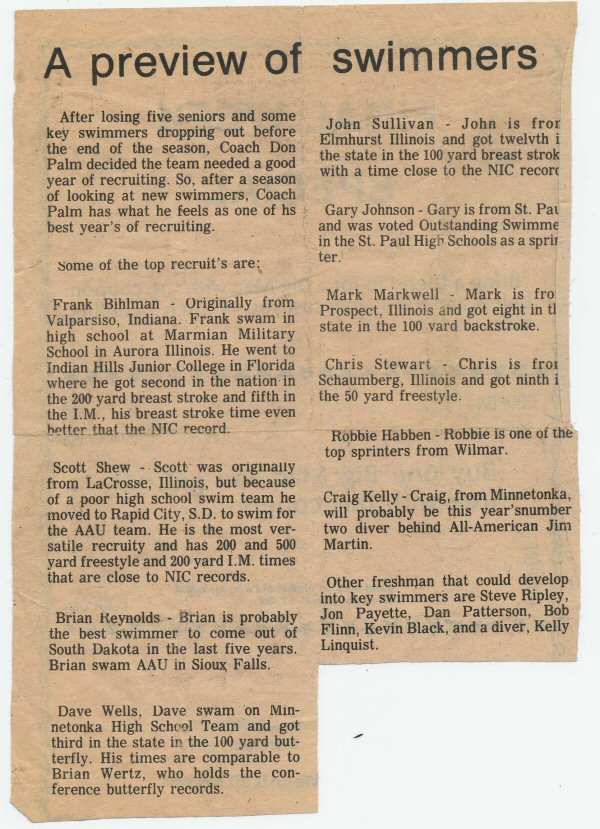
News Paper Article about The Incoming 1978-79 Recruits
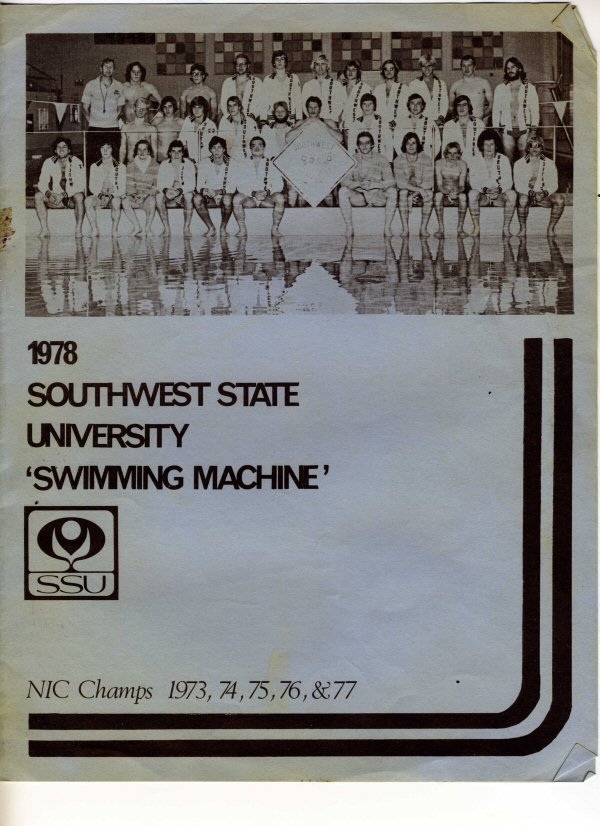
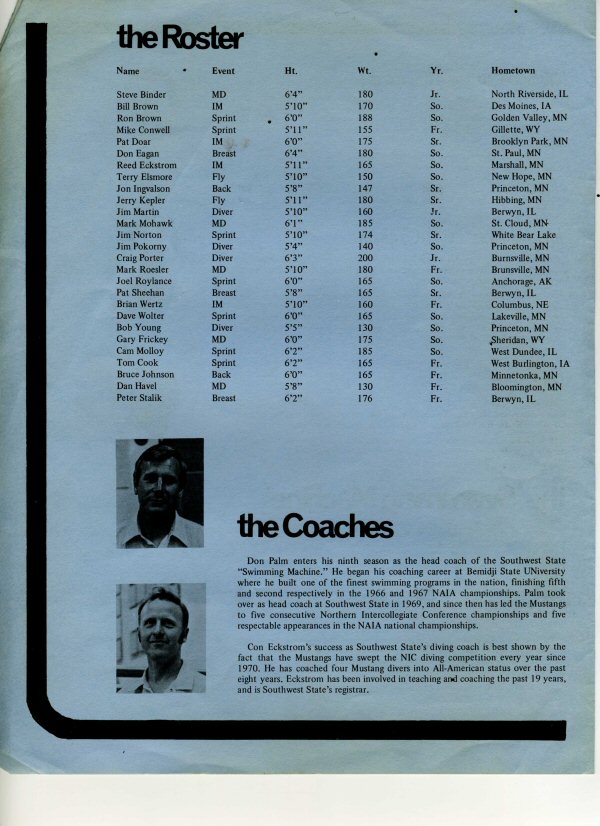
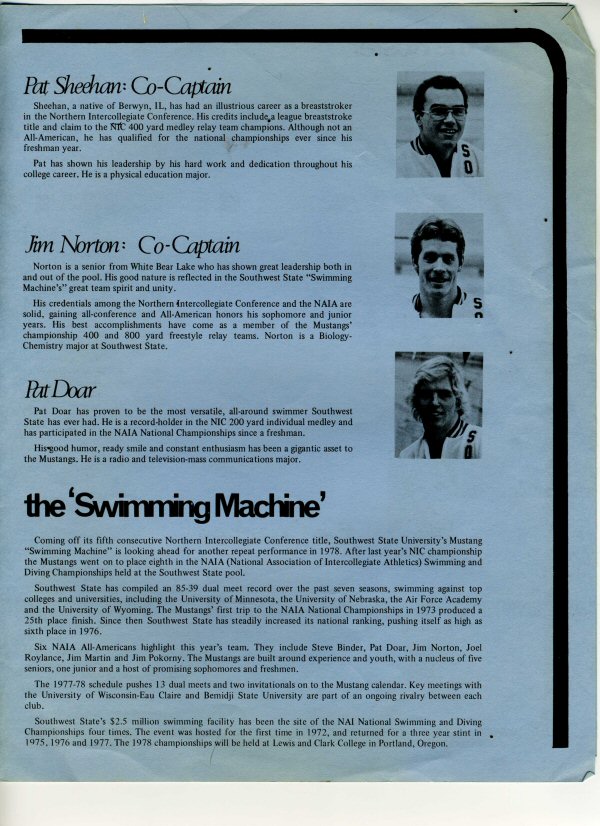
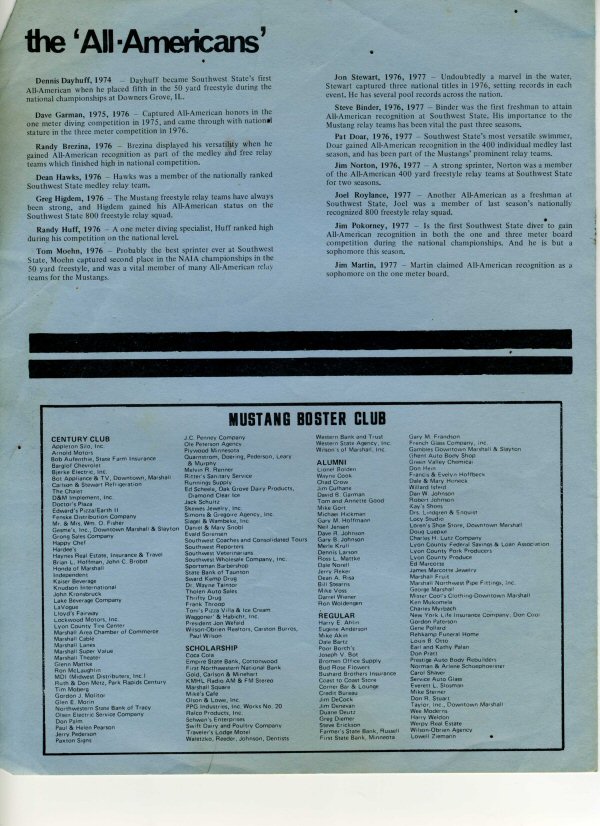
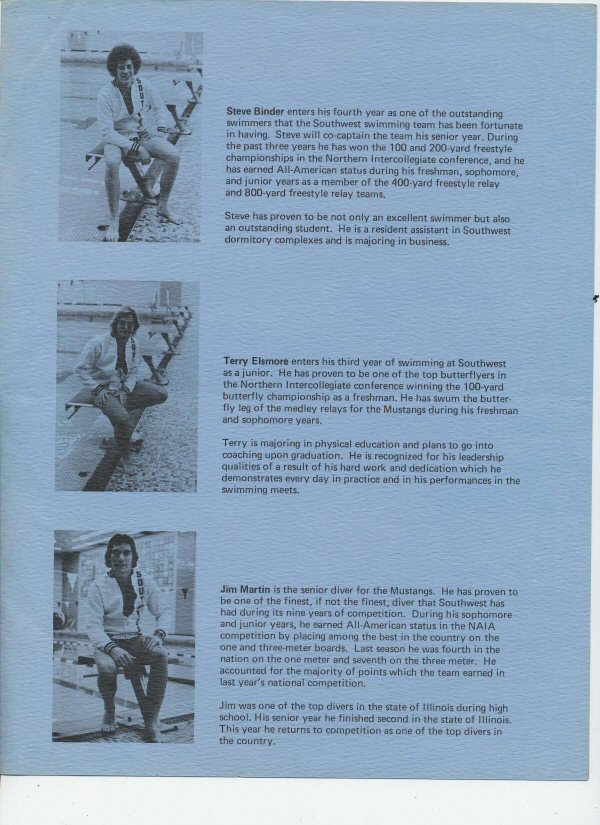
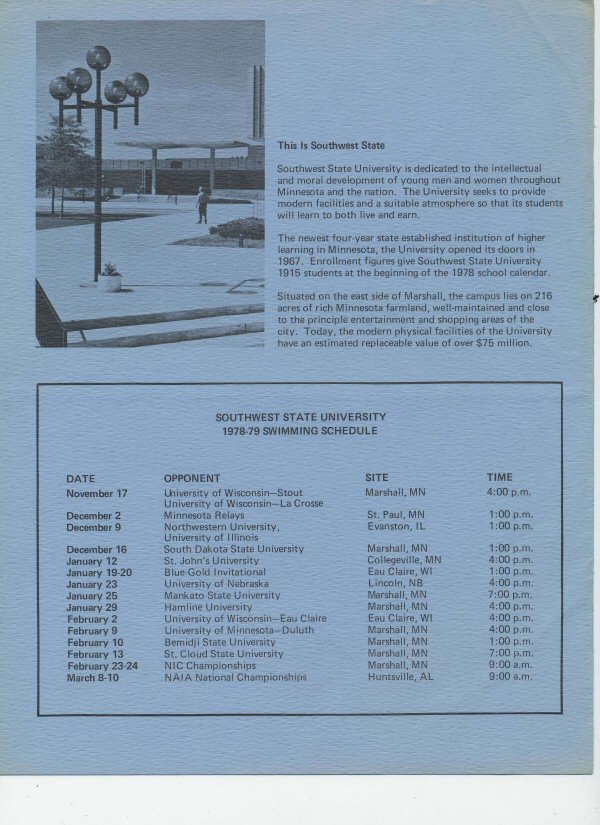
1978 Team Media Guide
Program from a 1979 Duel Meet with the
University of Minnesota Duluth
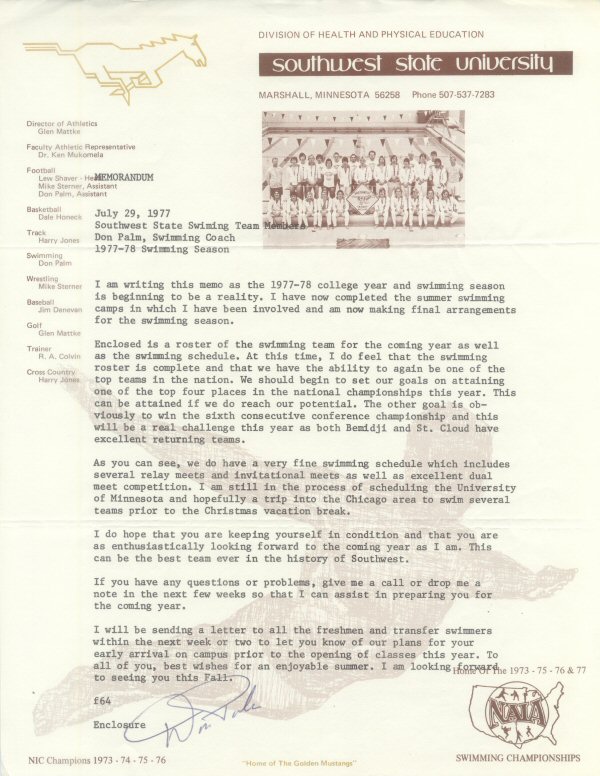
1977 Summer Team Memo
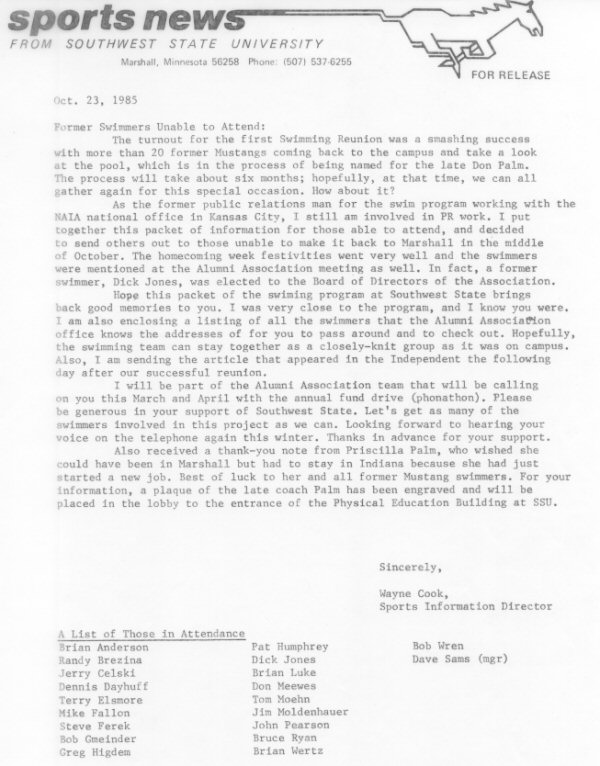
1985 Reunion Press Release
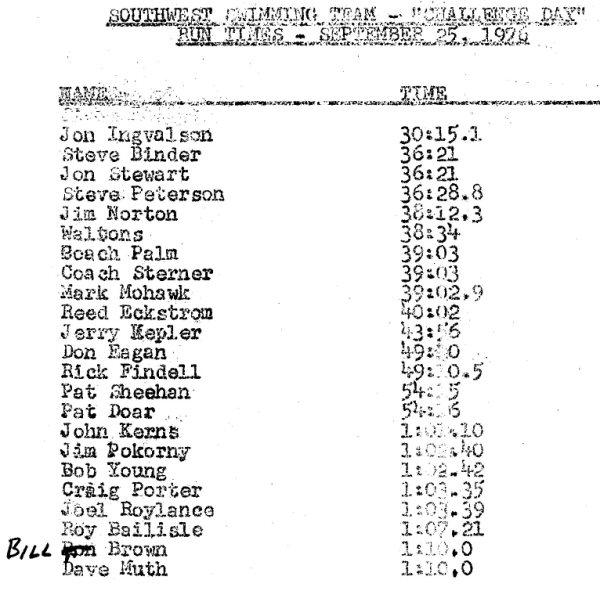
1976 Challenge Run Results
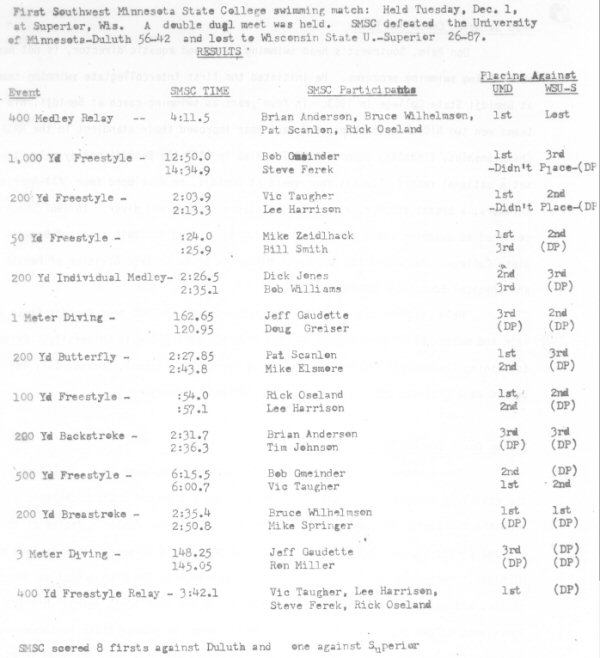
First Meet Results - December 1970
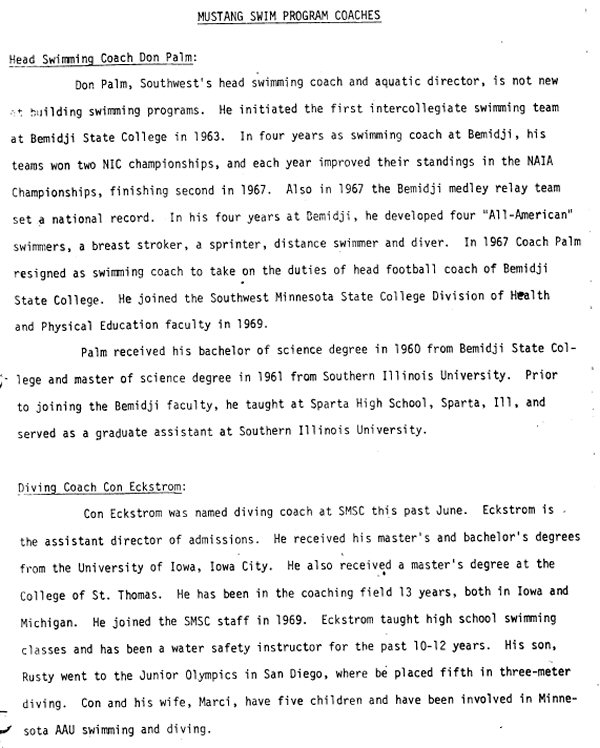
First Coaches Bio
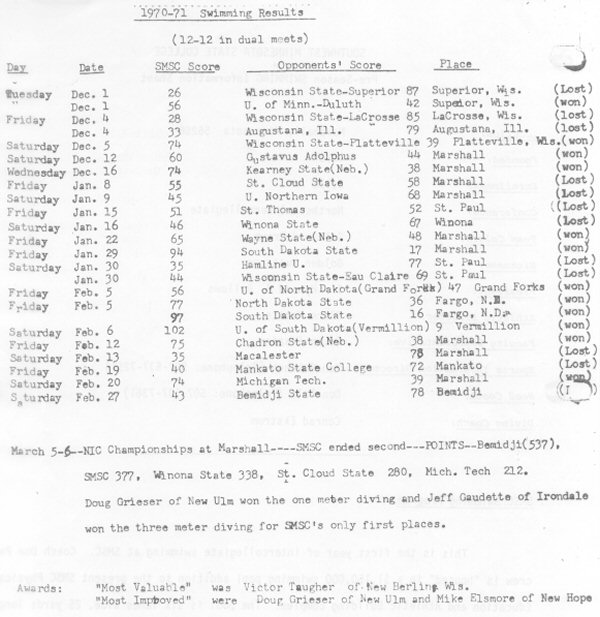
First Season Dual Meet Results
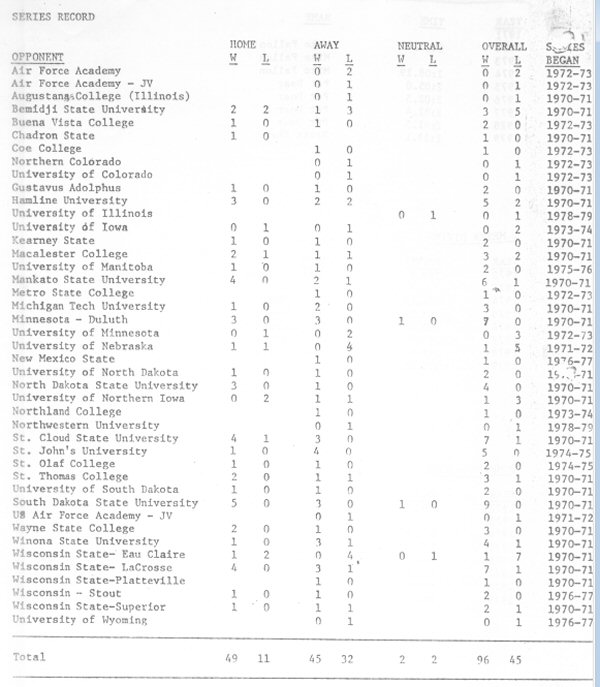
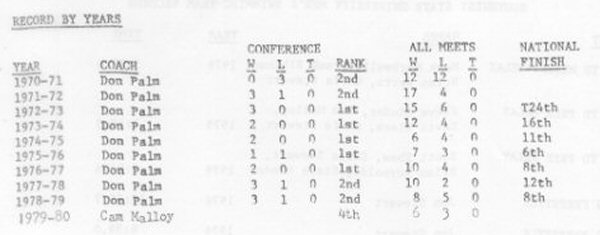
All Time Dual Meet Record
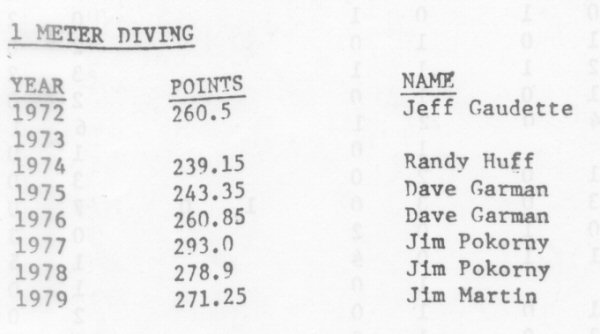
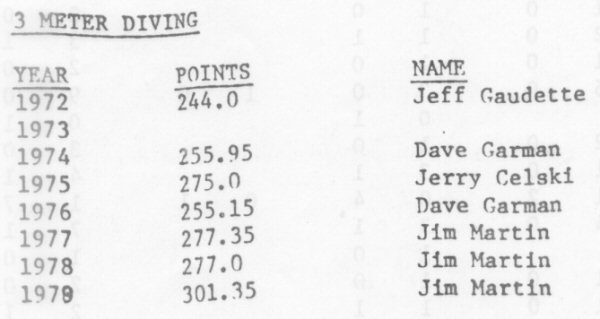
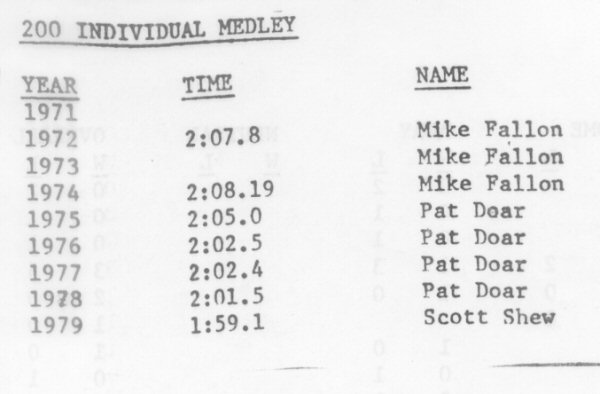
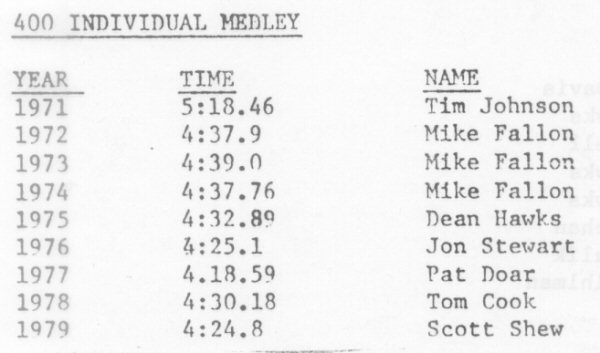
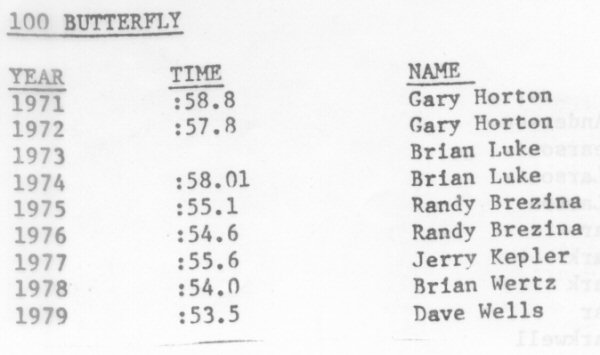
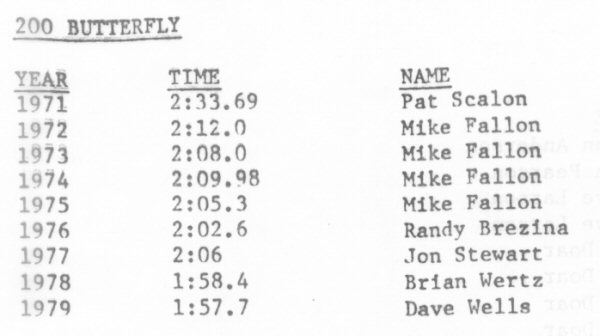
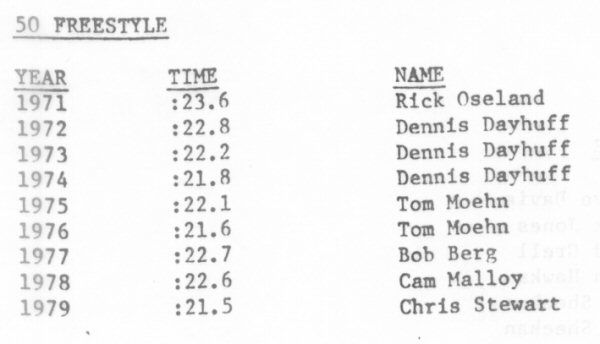
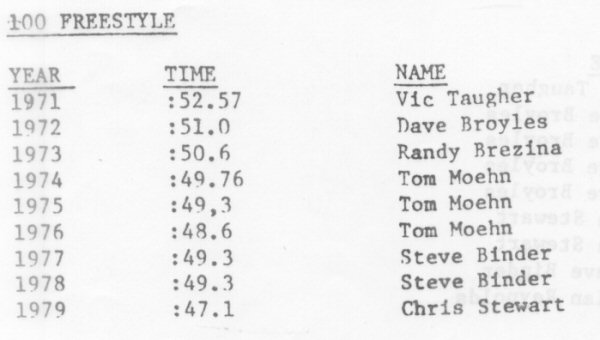
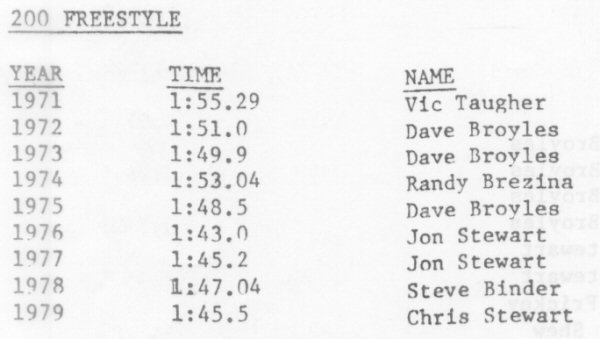
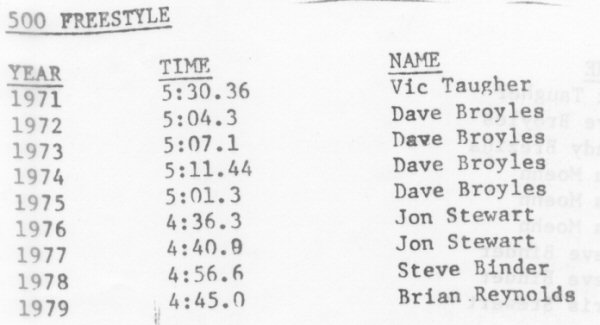
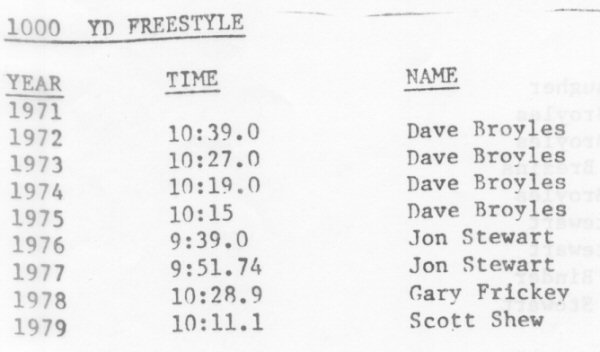
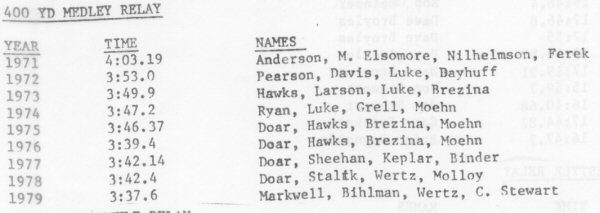
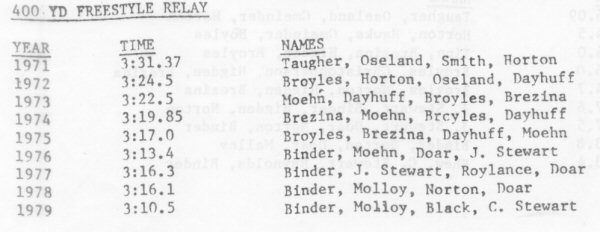
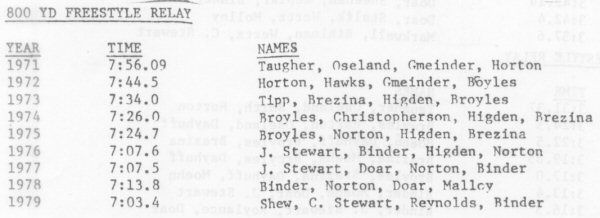
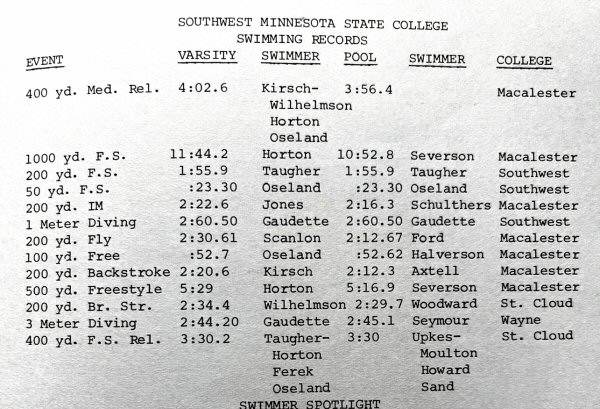
Team Best Times by Event and Year
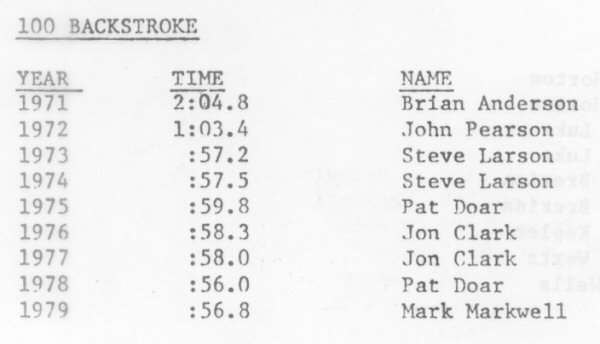
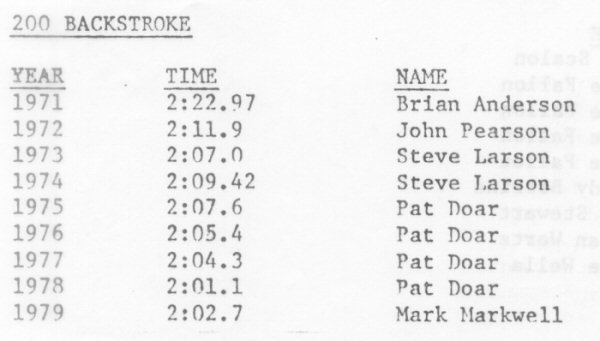
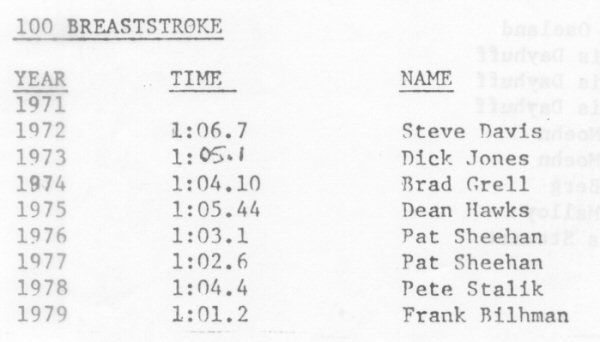
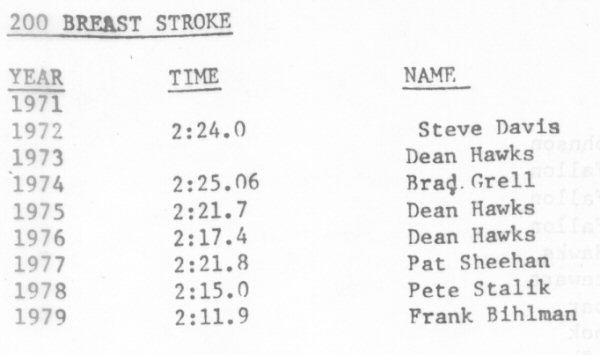


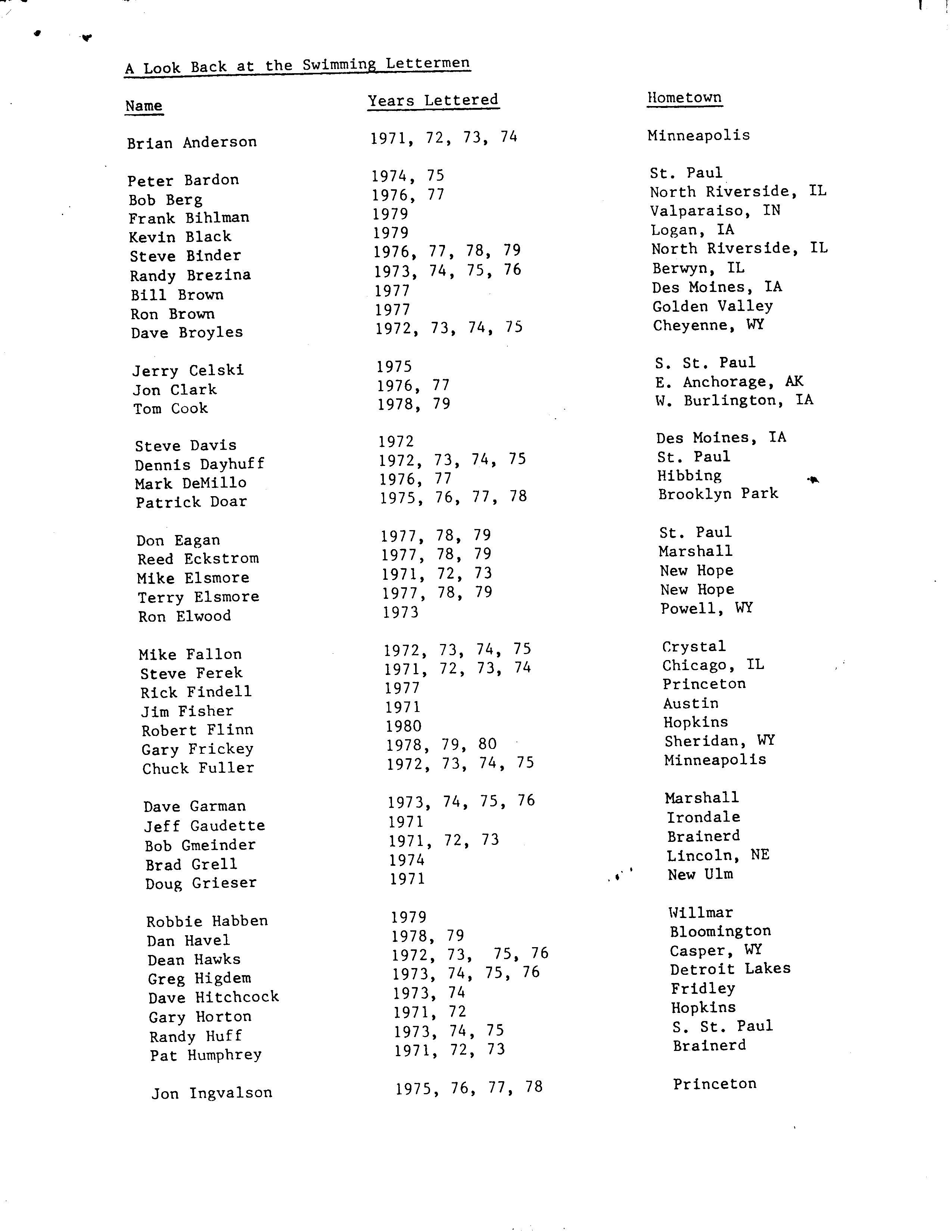
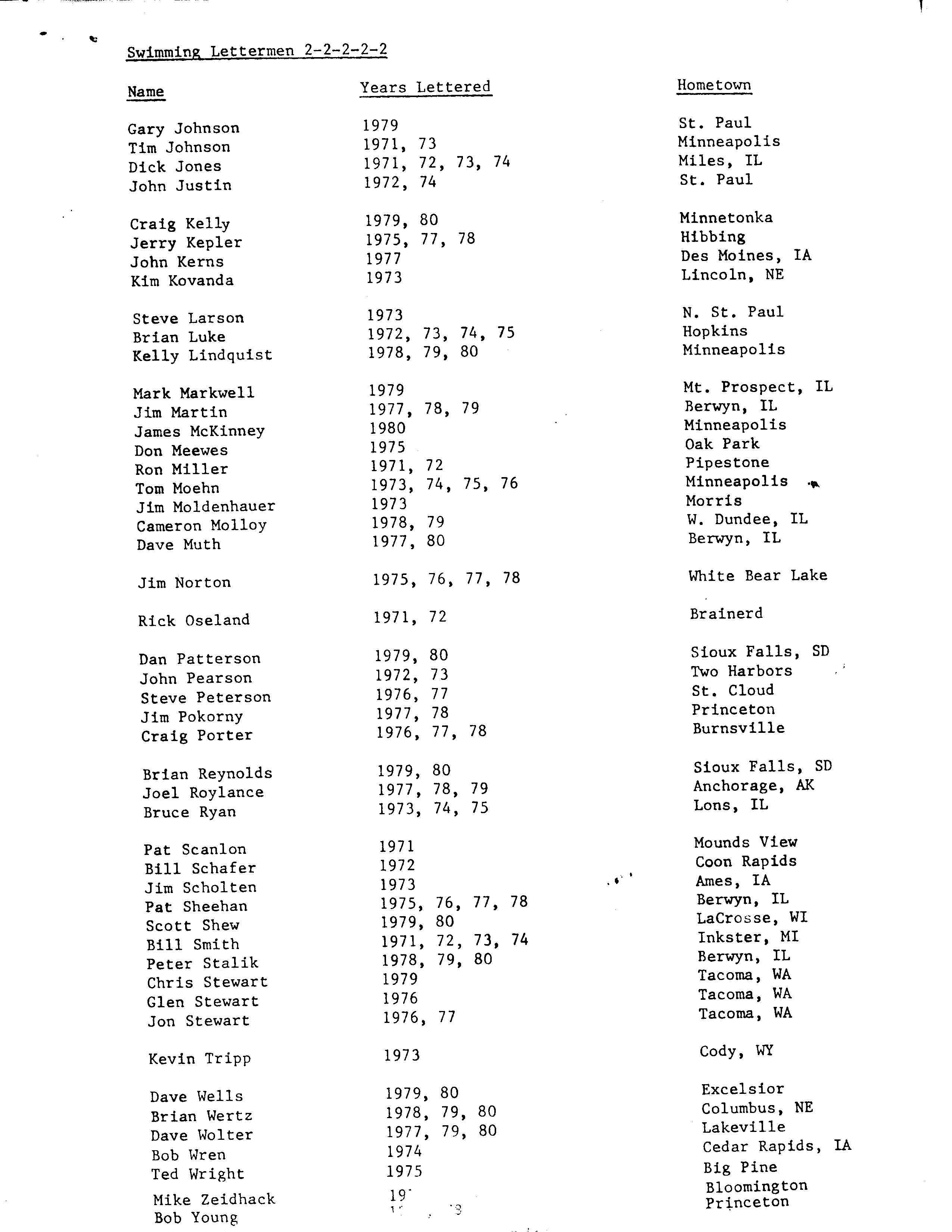
Varsity Letter Winners
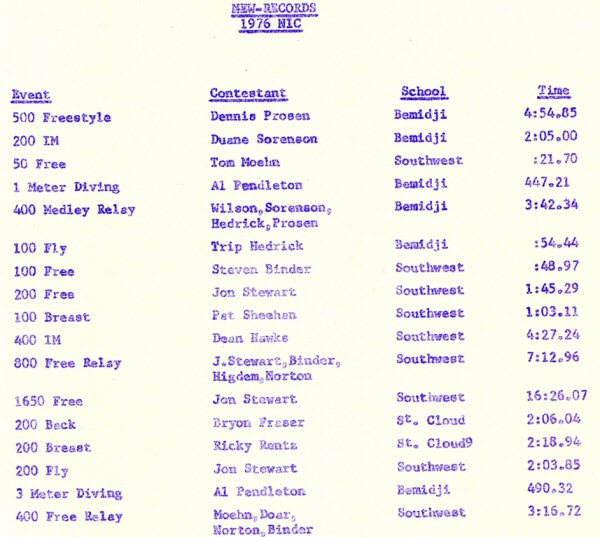
New Conferene Records Set in 1976
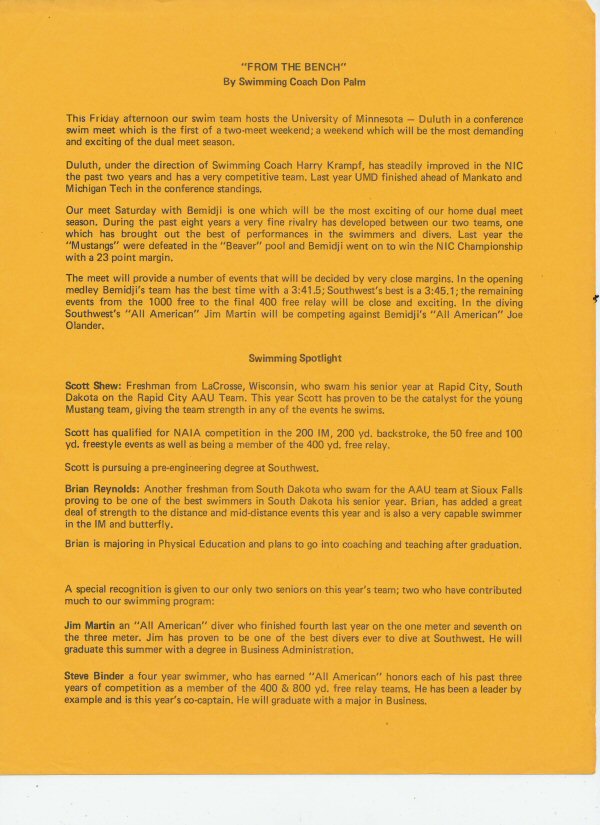
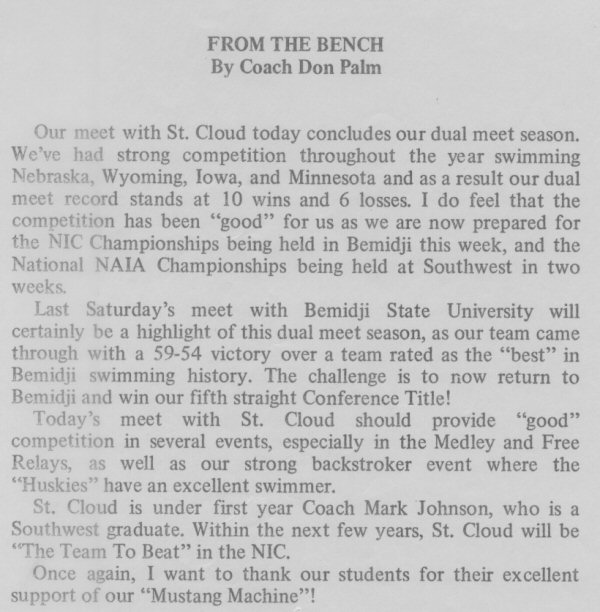
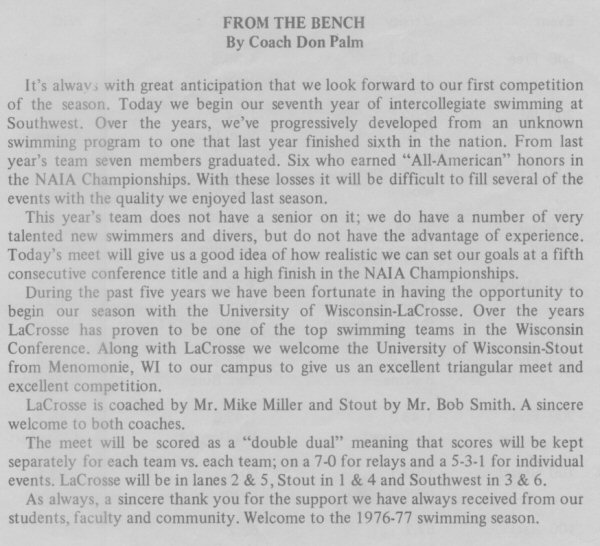
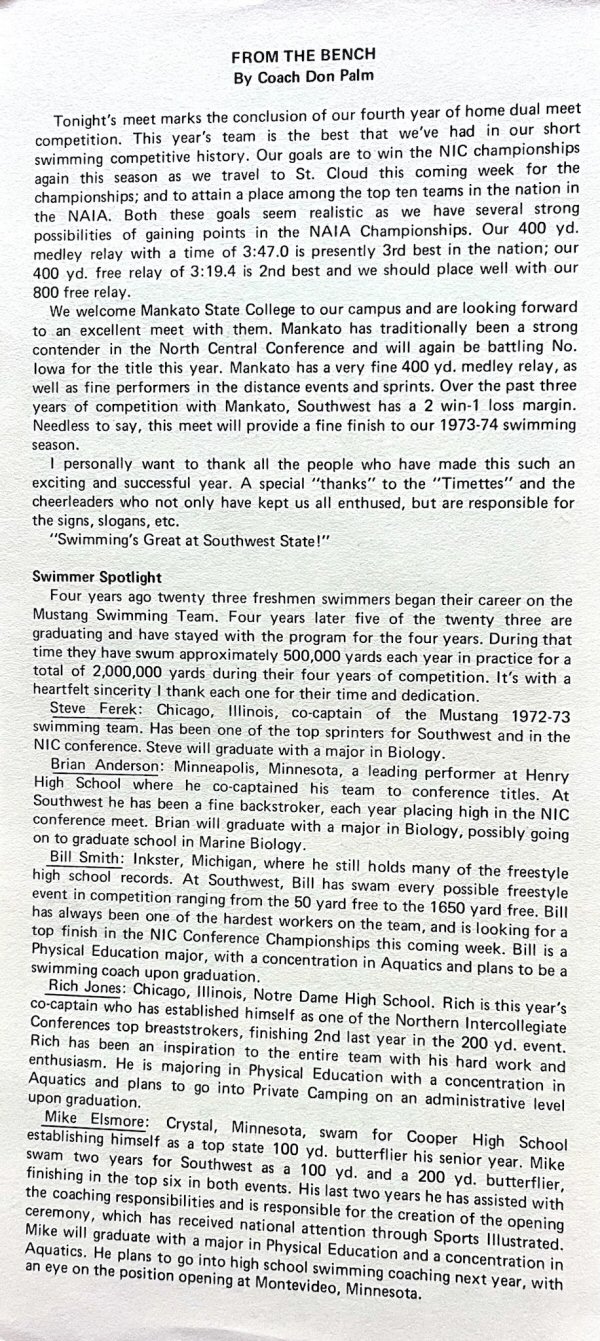
Coach Palm's "From the Bench" article - 1977
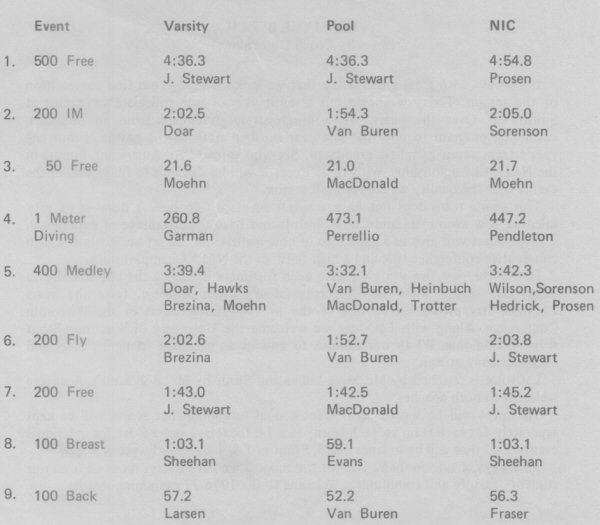
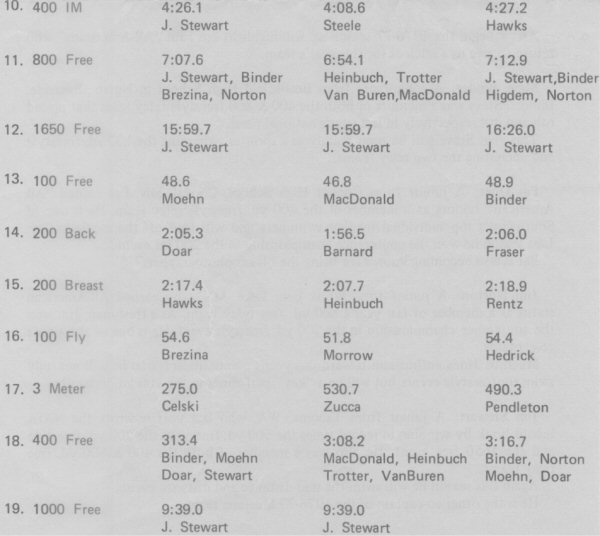
1971 Season Ending Press Release
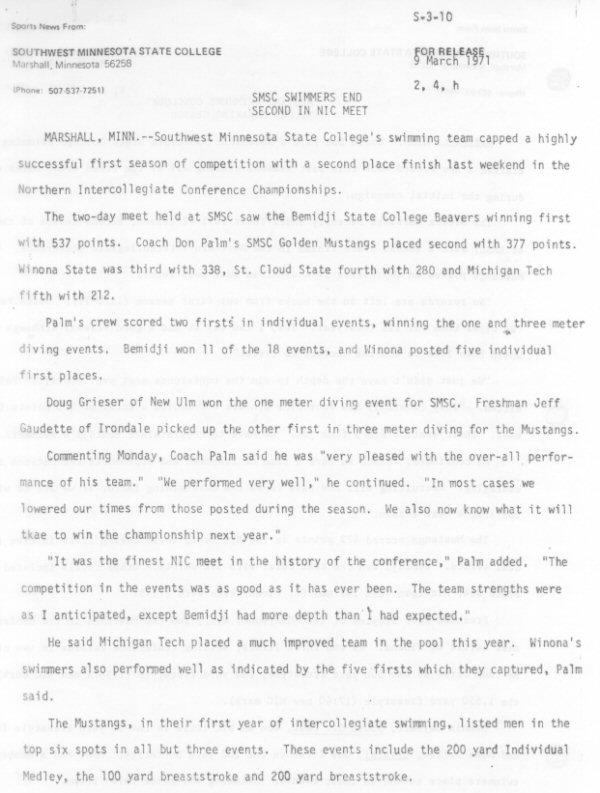
1972 Season Ending Press Release
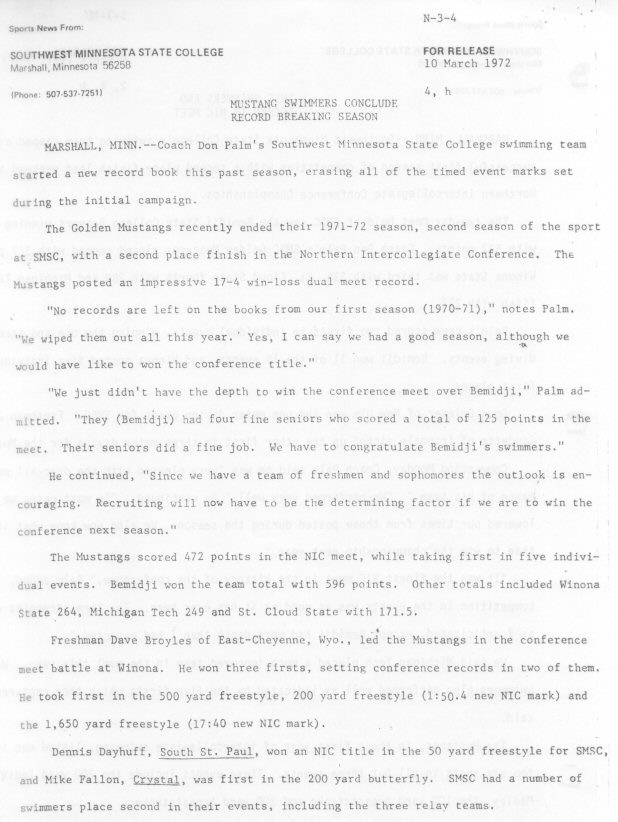
1973 Season Ending Press Release
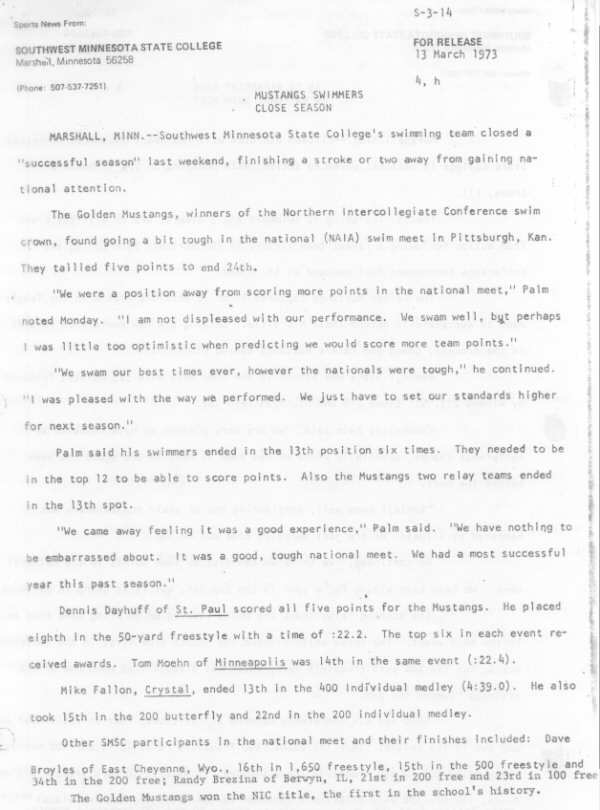
1974 Season Ending Press Release
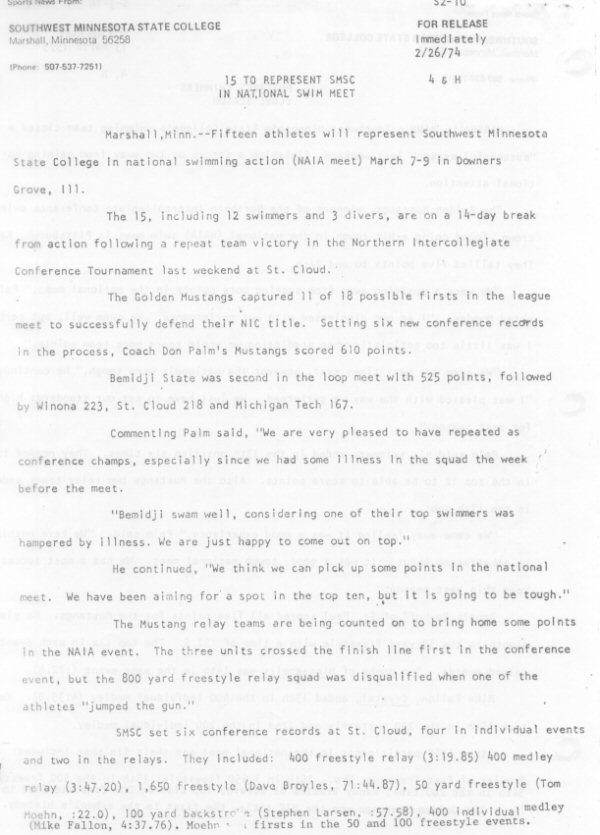
1975 Season Ending Press Release
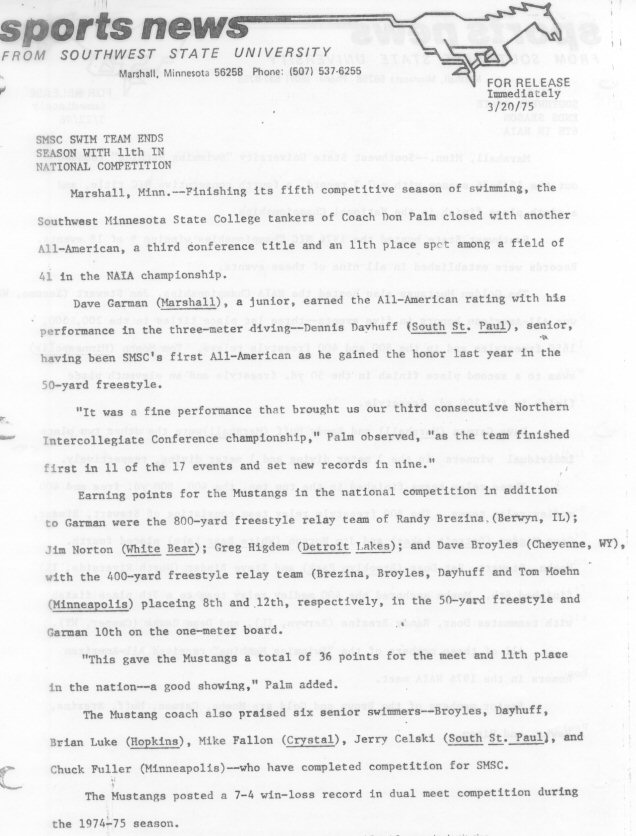
1976 Season Ending Press Release
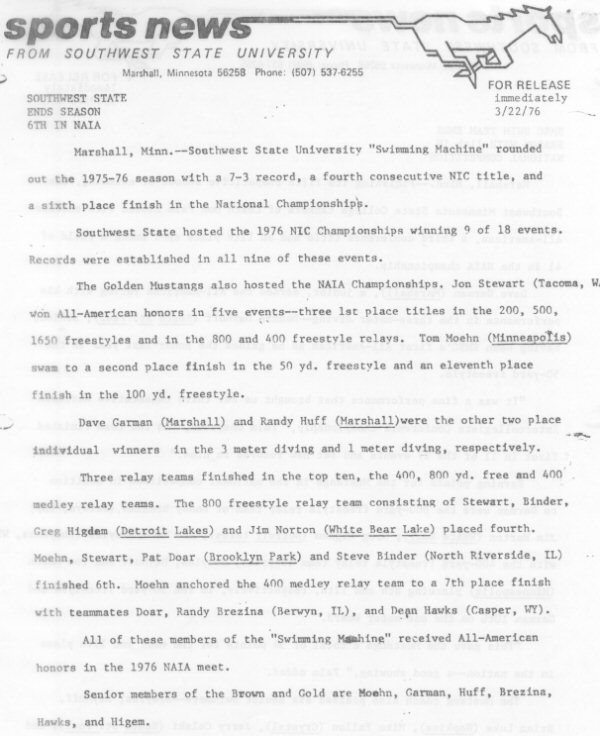
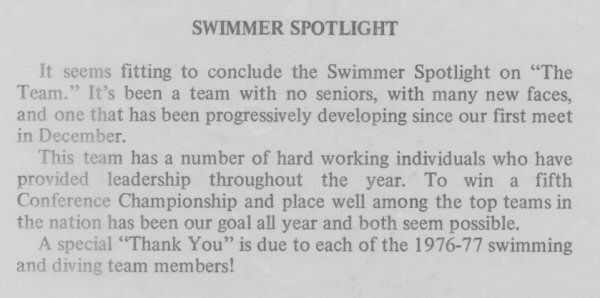
1977 Season Ending Press Release
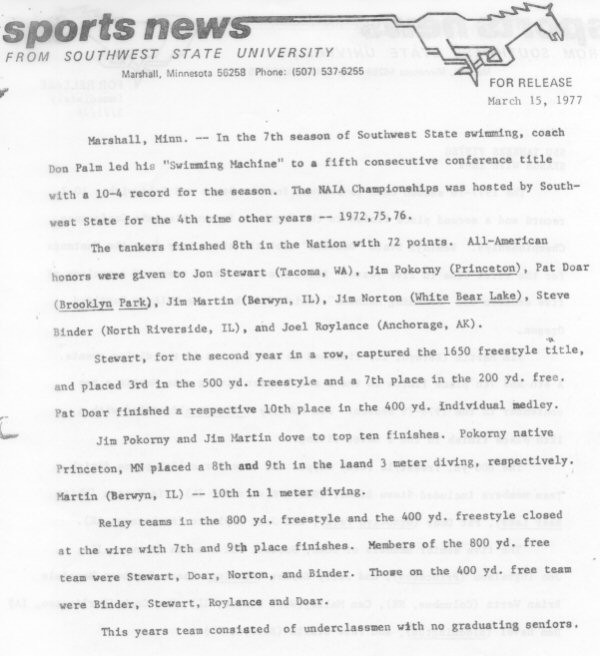
1978 Season Ending Press Release
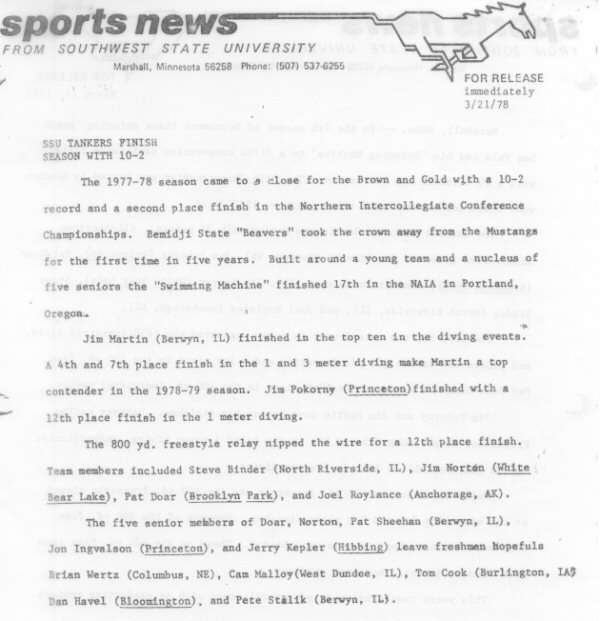
1979 Season Ending Press Release
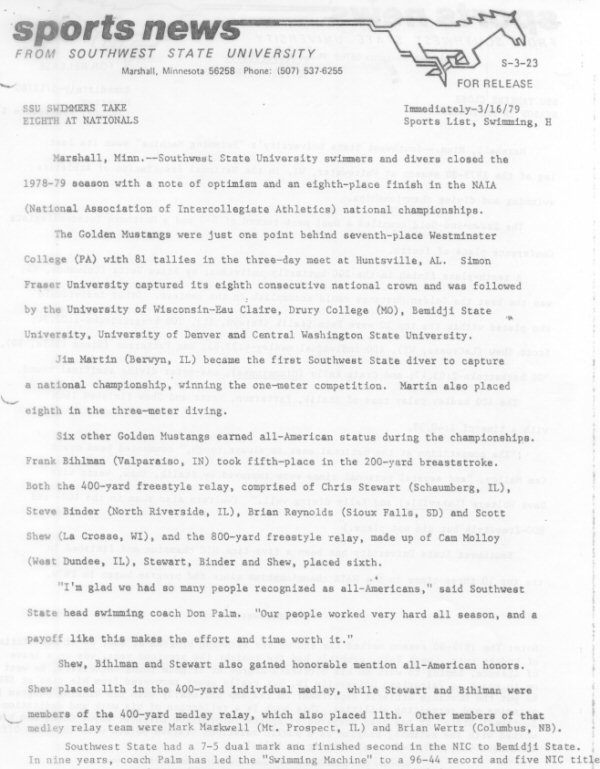
1980 Season Ending Press Release
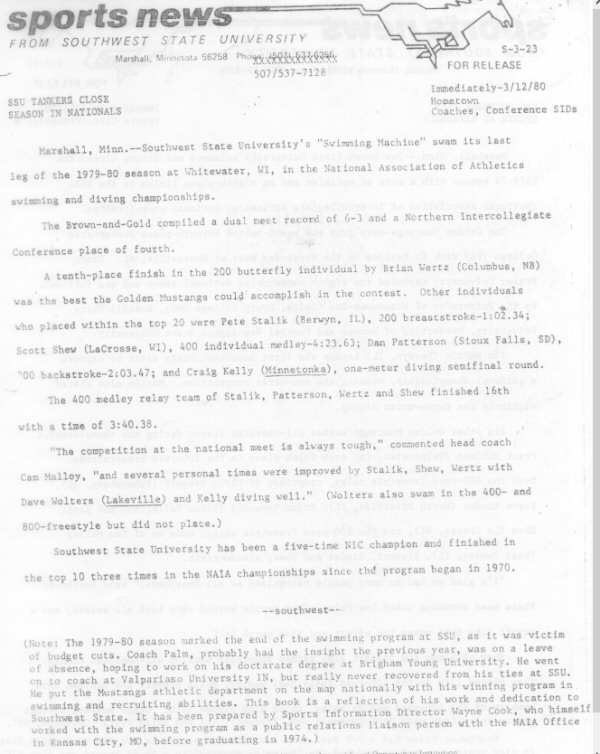
Booster Poster
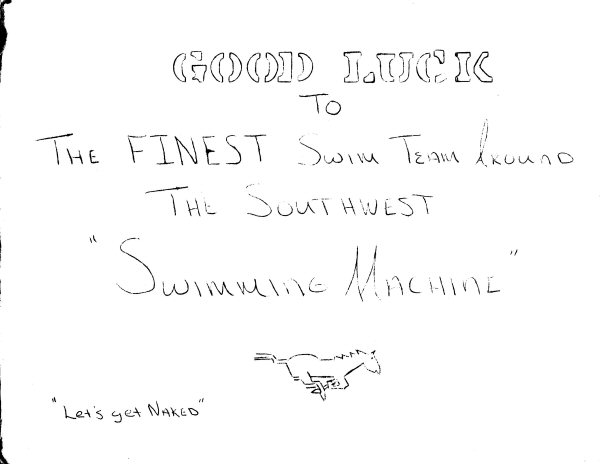
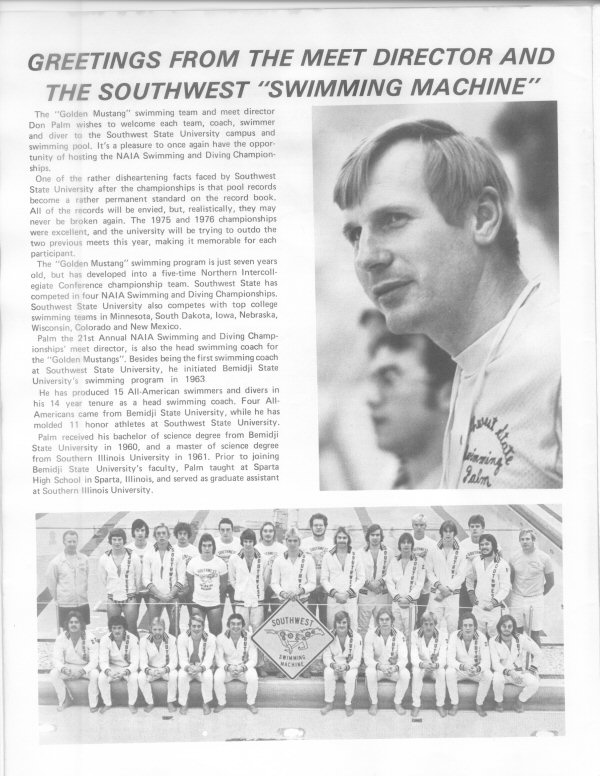
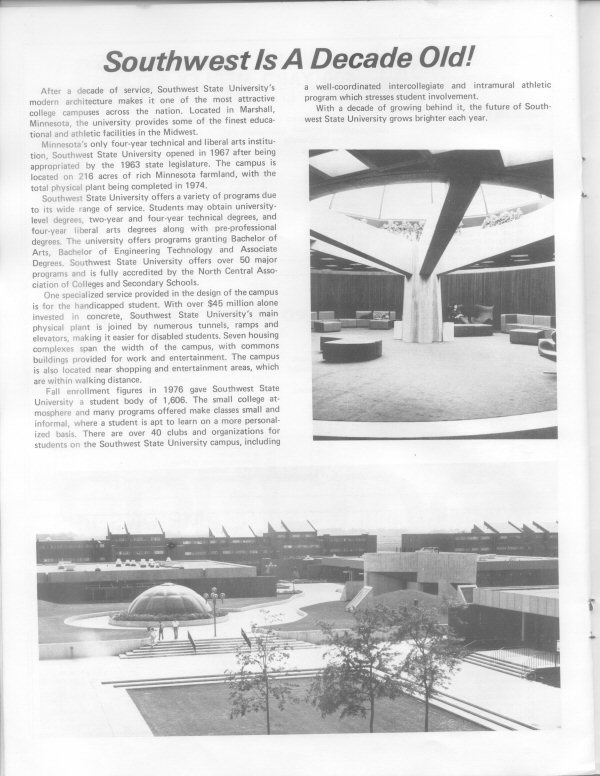
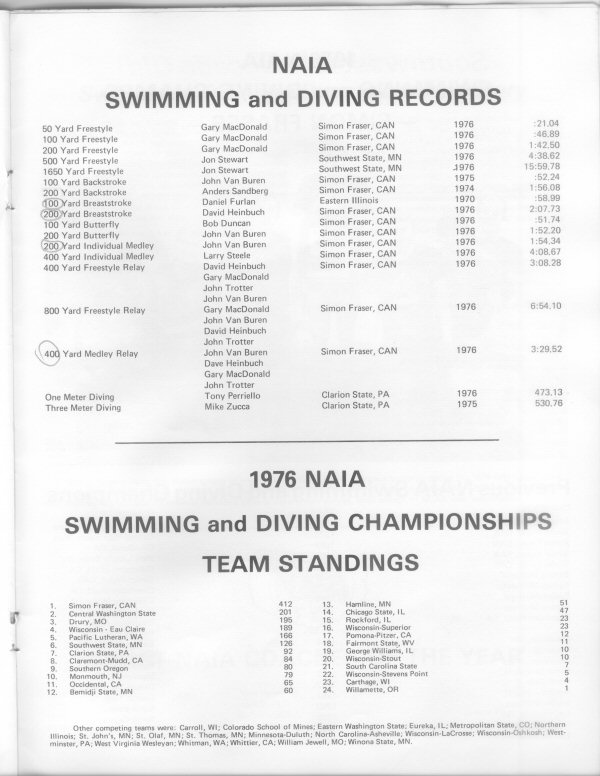
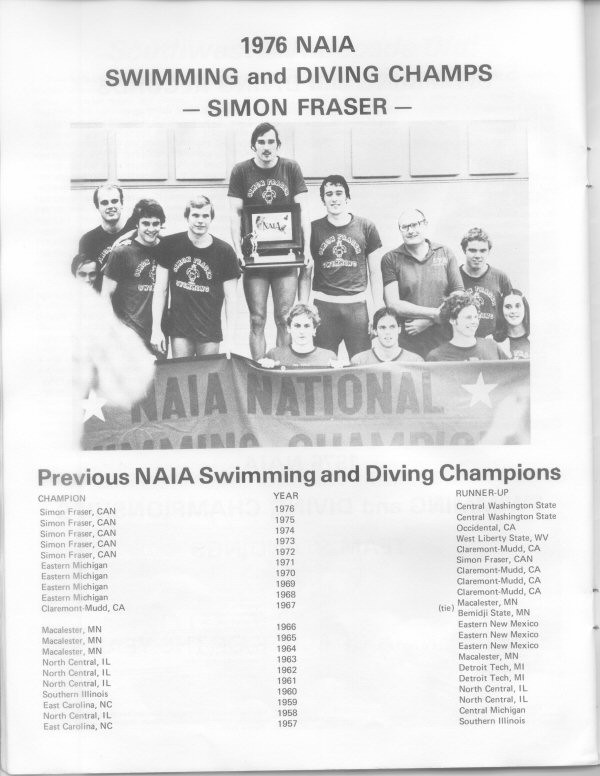
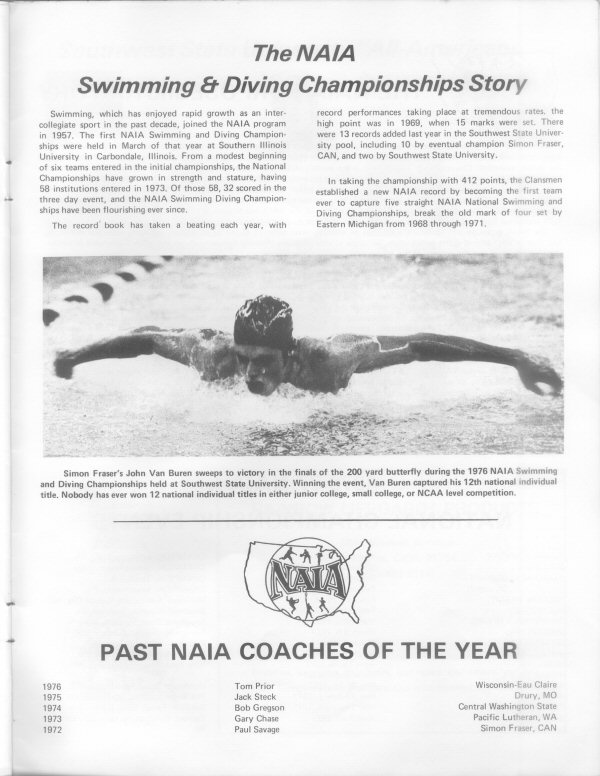
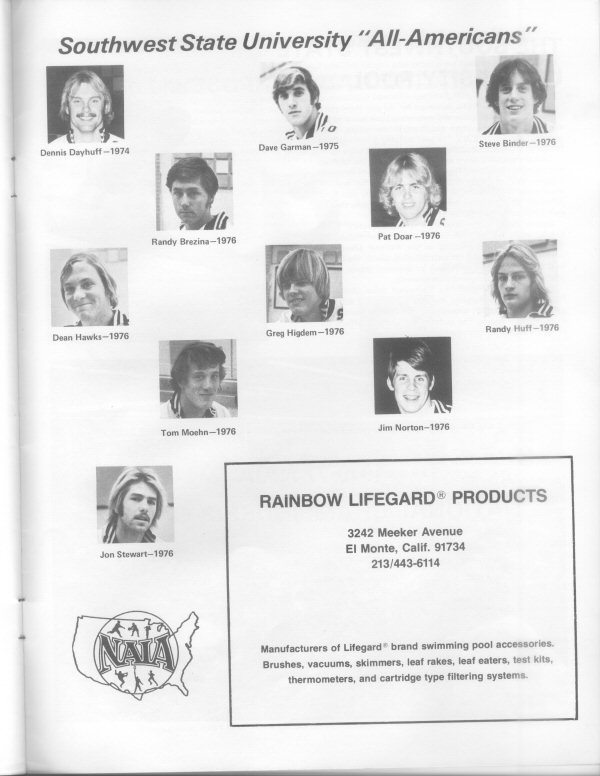
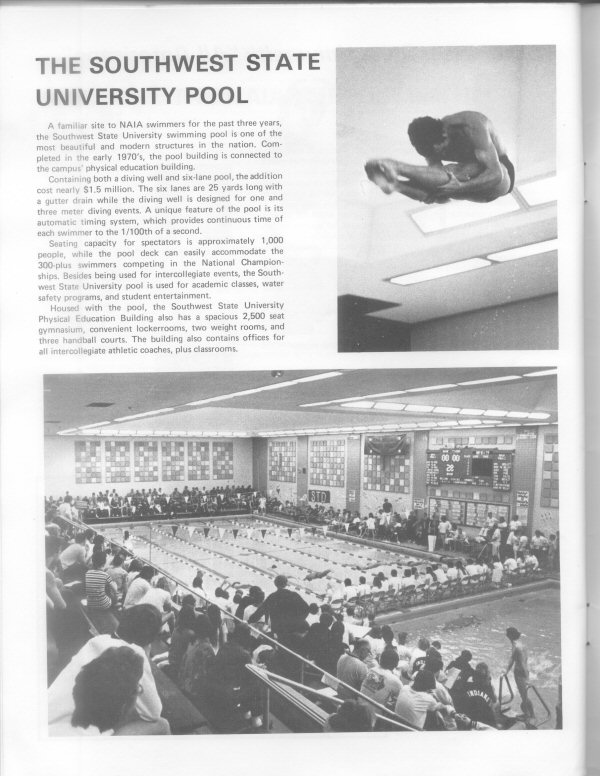
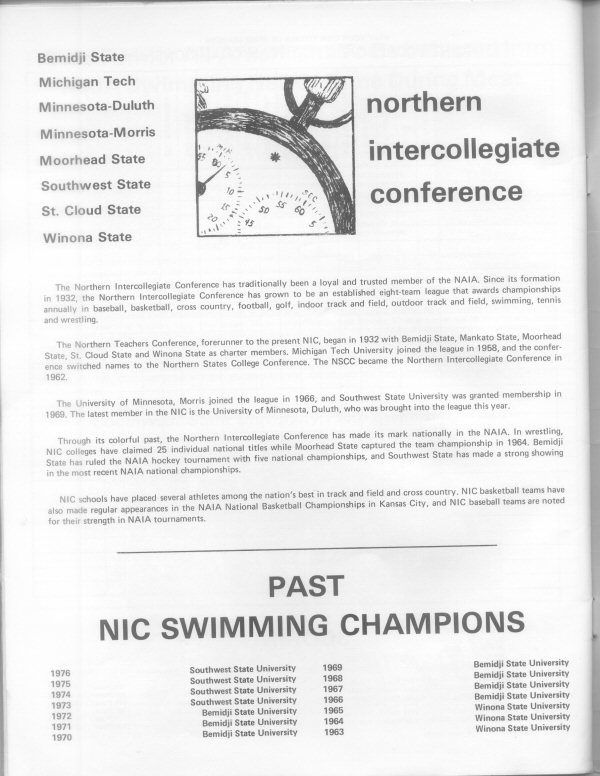
Information from the 1977 NAIA Nationals program
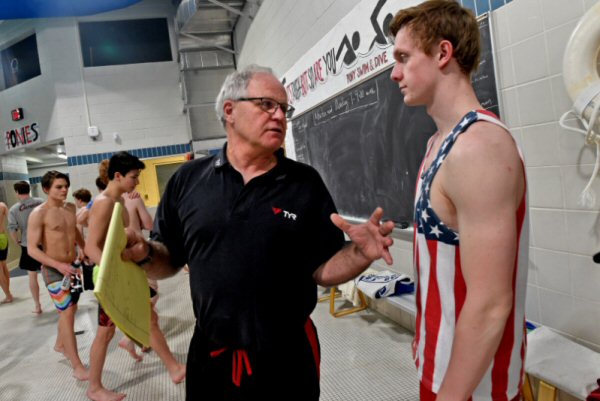
February 2018 Article in Stillwater, MN paper about Brian Luke's HS team
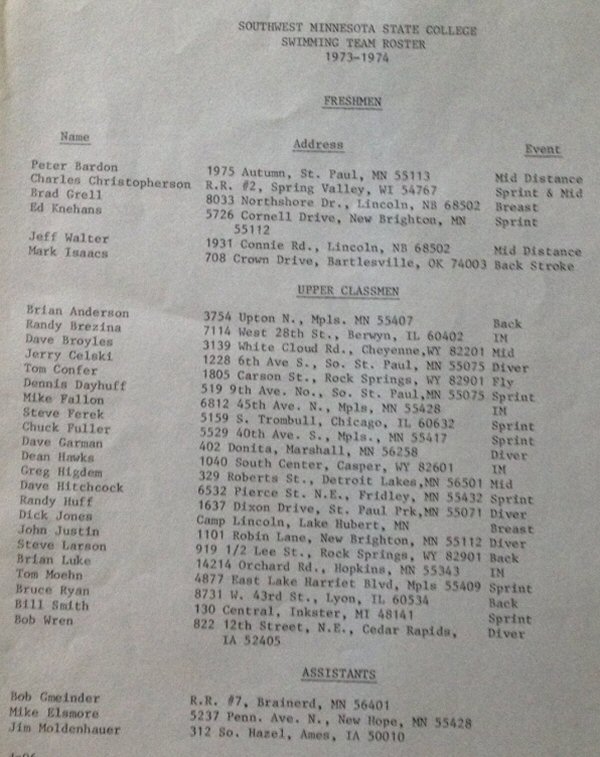
73-74 Roster
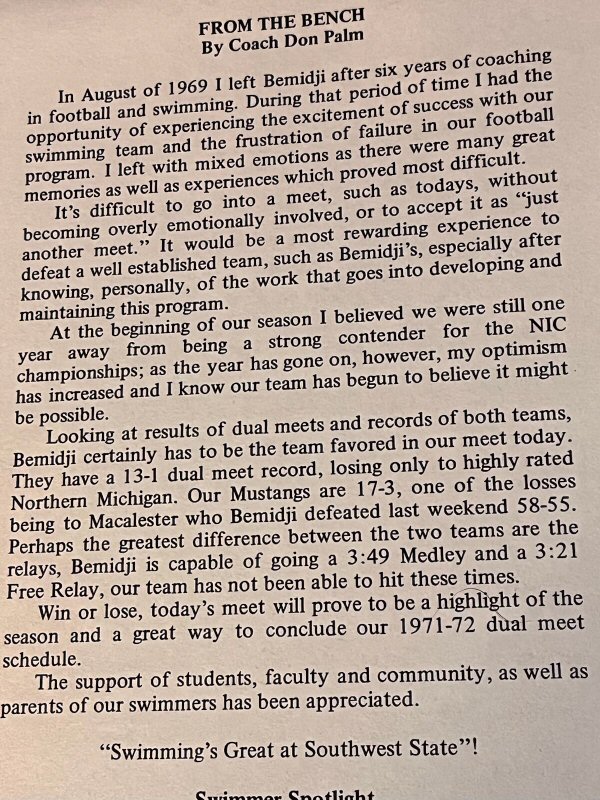
Bemidji Meet - February 26, 1972
(courtesy of Dave Broyles)
Bemidji, traditionally for the past six years has easily won its’ dual meets against NIC conference foes. This year was predicted to be no different. By all pre-season and late season reports the ‘Beavers were unbeatable.
Never in the short history of athletics at Southwest has a team, a student body, or a community reacted so enthusiastically to an athletic event.
Very little studying occurred during the week by the swimmers, as they were busy making signs, soliciting support and practicing. Two sets of portable bleachers from the high school were rented to increase the seating capacity of the pool to over 1000 spectators. A sheet “donated” from the dormitories was painted into a symbolic “Swimming Machine” by Pat Humphrey and Steve Davis.
During the season, the Bemidji team was scouted on several occasions, so their strengths and weaknesses were thoroughly known. It was apparent that both of the Bemidji relay teams were capable of winning over Southwest. It was decided to attempt to defeat them by reaching 57 points in the 11 individual events.
As the 2:00 p.m. meet approached, the bleachers filled to an overflowing capacity crowd of Mustang supporters. As the Southwest team entered the pool, the emotionalism of the crowd and the team was electrifying. Win or loose, the Mustang swim team had succeeded in creating a rivalry, which would become a tradition in future years.
To the deafening noise of the near hysterical supporters, the meet began, with the Beavers winning the opening relay and going out in front 7-0. In the 2nd event, the 1000 yd Freestyle, Dean Hawks paired off with 1971 distance champion, Perry Brown and nearly lapped him in bringing home a 1st place in his individual best time of 10:49. Score: Bemidji-11, SW 5. In the 3rd event, the 200yd Free, Dave Broyles set a new varsity record of 1:52.1 and another 1st for the Mustang’s bringing Southwest another point closer to taking the lead, Bemidji-15, SW-10
The next event, 50yd Freestyle set the stage for the real dual ahead for both teams, as Dennis Dayhuff and Rick Oseland, slammed the Bemidji Duo of Jacobson and Rothlesburger with times of 22.8 and 23.0 to bring the score to 18-16 now in favor of Southwest. This event brought hysteria to the spectators, as well as the Mustang team and coaches!
In the 200yd. IM, Mike Fallon and Brian Luke came through with a 1st and 3rd respectively to bring the score to a 24-14 Southwest margin.
The one-meter diving with Justin and Miller scoring 2nd and 3rd added four more points to the score maintaining a 28-24 margin.
The next event was one of the most exciting and one of the greatest examples of determination by Co-captain Gary Horton and Freshman Mike Fallon. Gary had swum the Medley Relay and the 200 Free, had little time to recover: Mike Fallon had won the 200I.M. preceding the 1 meter Diving both came back to win the 200Fly in a “one-two” slam to gain a mounting 36-25 lead over the “Beavers.” Horton’s performance is one of the reasons he is respected as a leader on the team.
The next event, the 100 Free, put Dayhuff and Broyles against Rothlesburger and Venziano in a close finish. Broyles won a 1st and Dayhuff , closely touched out by Venziano finished 3rd. Sore SW-42, Bemidji-28
The 200 Backstroke with performances by Pearson and Anderson added 2nd and 3rd place points to the score and 4 more points for Southwest, 46-33.
Another example of sheer determination was evidenced in the 500 Free, as Dave Broyles only two events earlier won the 100 Free, to come back and win the 500 Free. Dean Hawks finished 3rd, to pick up another team point and the score went to 52-36 in Southwest’s favor.
In the 200 yd. Breast, Steve Davis finished 2nd to future N.A.I.A. champion Marc Hamren and added 3 more points to the SMSC score, bringing Southwest within 2 points of a dual meet victory; 55-42.
With the majority of the final relay team swimming in three individual events, it was evident that the remaining two points were needed in the 3 meter diving—a second place was needed.
Although the mustang divers finished 2nd and 3rd in the one meter, the story was different on the three meter, as both Bemidji divers, Trauter and Chiapetti, turned in excellent performances to go 1st and 2nd and clinch the meet for Bemidji.
The 400 Free relay was anti-climatic as the Bemidji team easily won over the partially complete Southwest team.
Final score of the meet, Bemidji-57, Southwest-56, Certainly a fitting conclusion to the greatest dual meet season in Southwest’s history.
One-Year Away!
75-76 Team Letter
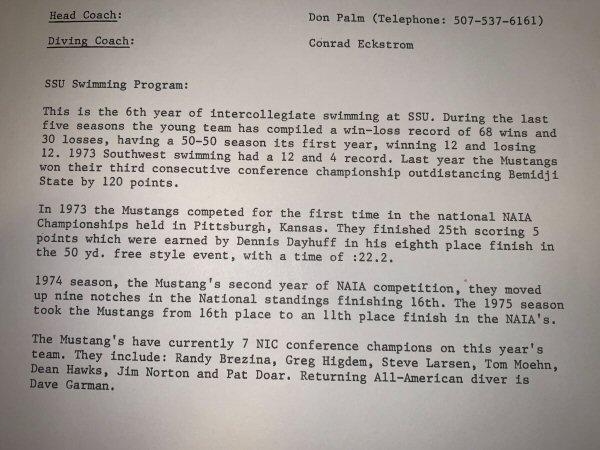
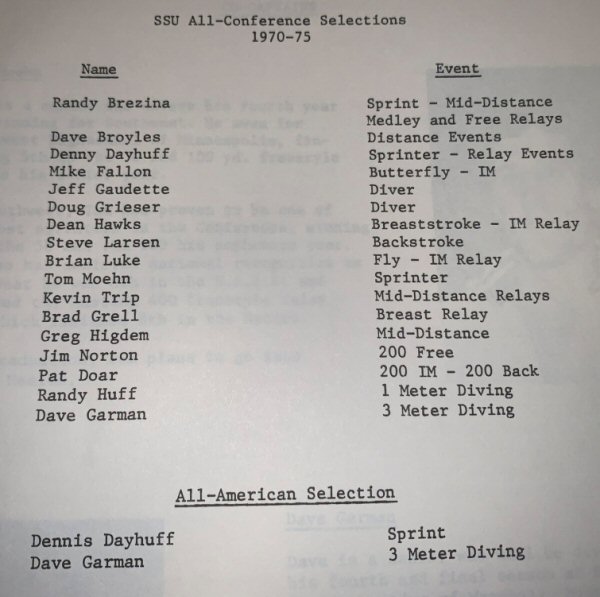
70-75 All Conference and All Americans
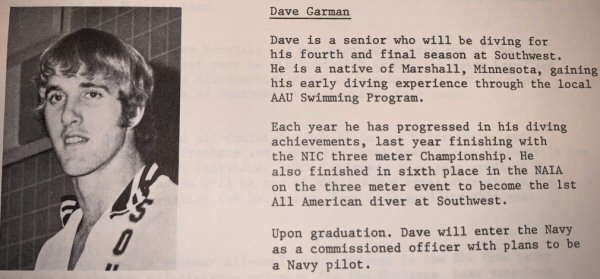
Dave Garman Bio
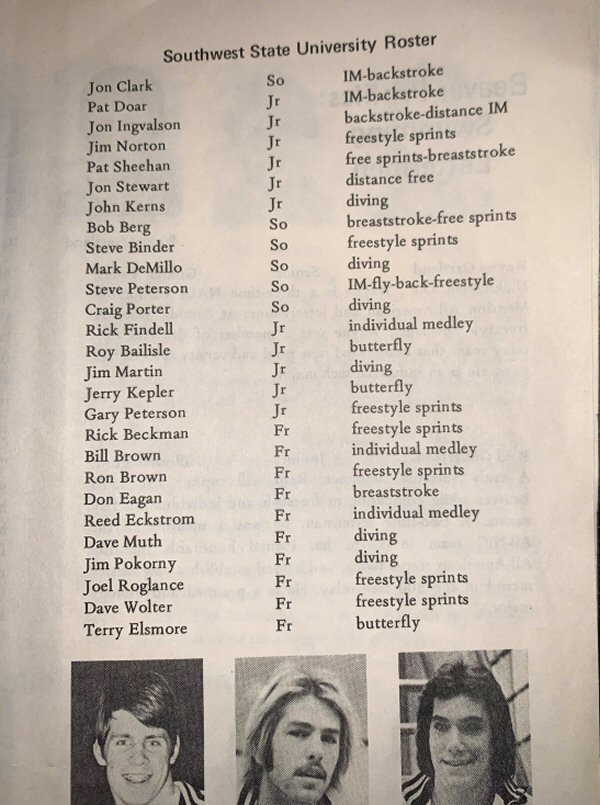
76-77 Conference Meet Team Roster
1978 Newspaper article about the dual meet with Eau Claire
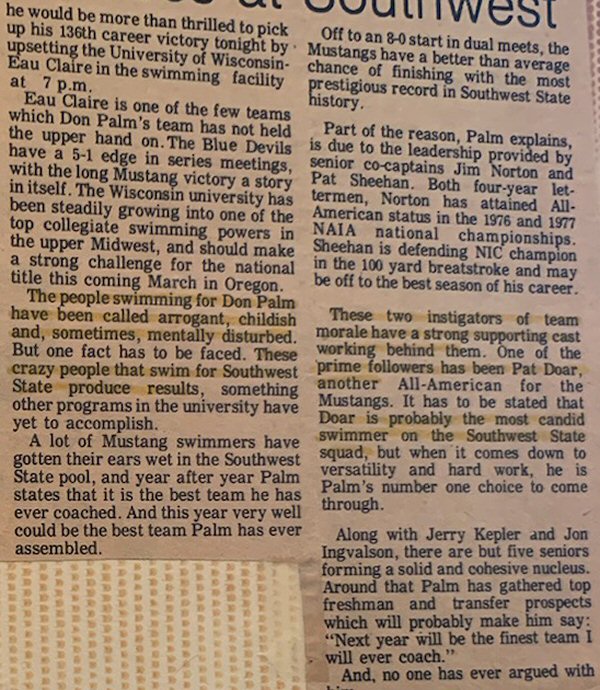
76-77 Meet Schedule
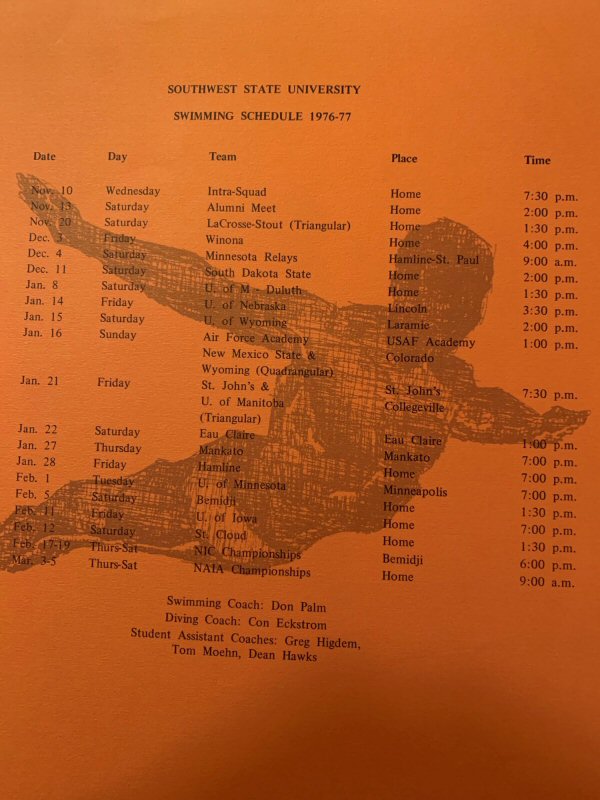
1978 News Paper Article
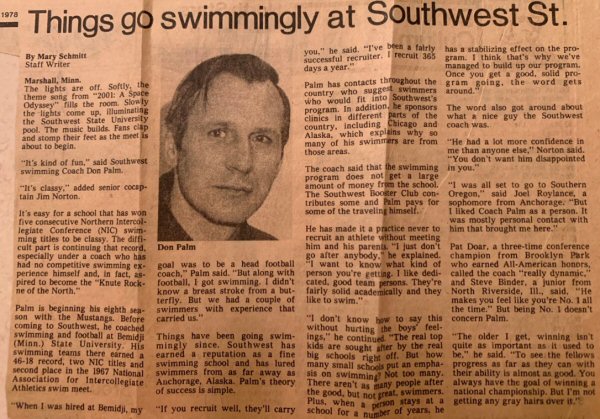
Article from unknow date and time, maybe 1980's?
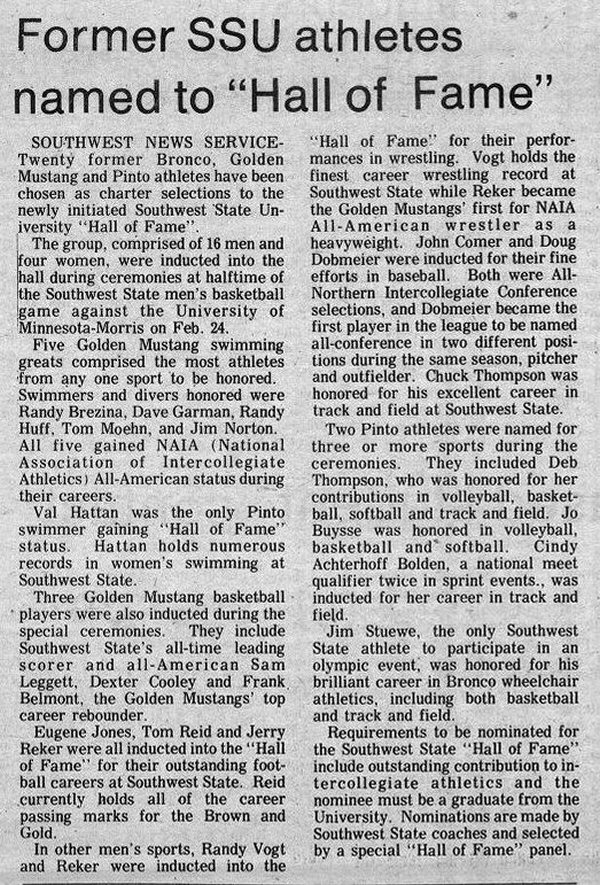
Article from 1973 Winona School Paper
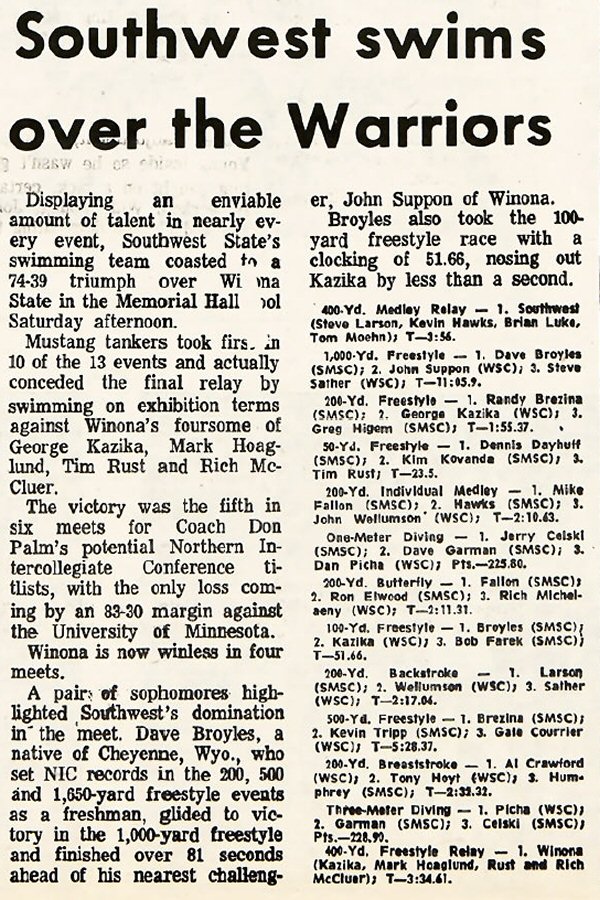
From the Valpraiso, Indiana Newspaper - September 30, 1986
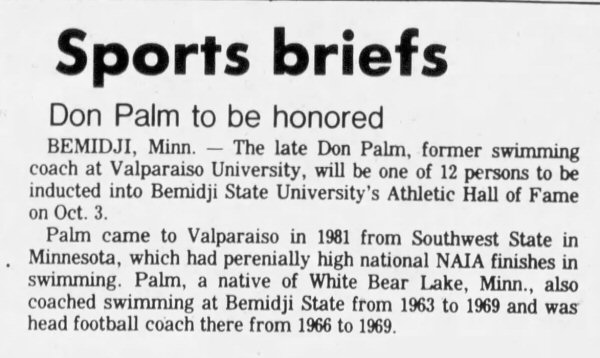
From the Berwyn, Illinois Newspaper - May 16, 1975
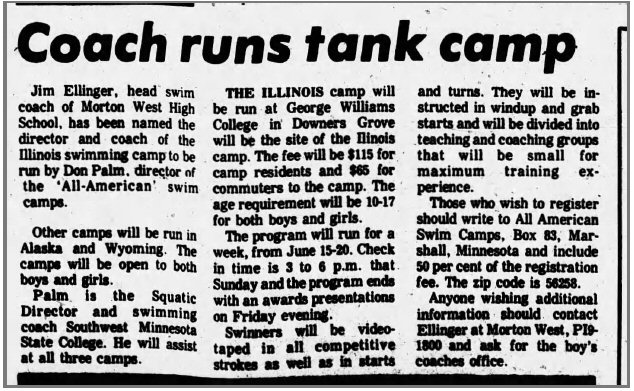
From the Minneapolis, Minnesota Newspaper - December 20, 1990
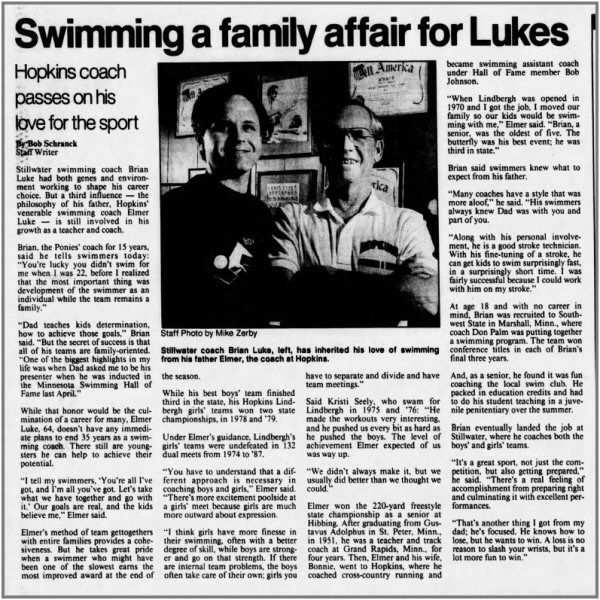
From the Sioux Falls, South Dakota Newspaper - June 28, 1978
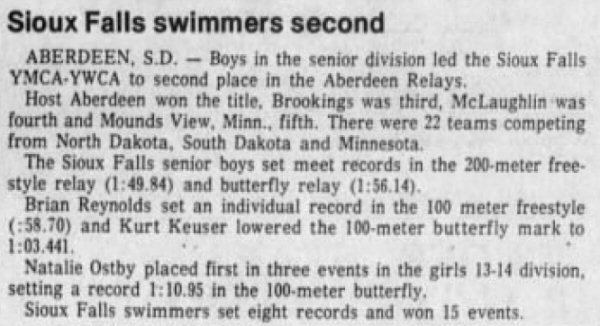
From the Chicago, Illinois Newspaper - March 8, 1974
NAIA Nationals - 50 Free Results - Denny Dayhuff - 21.887 (5th place)
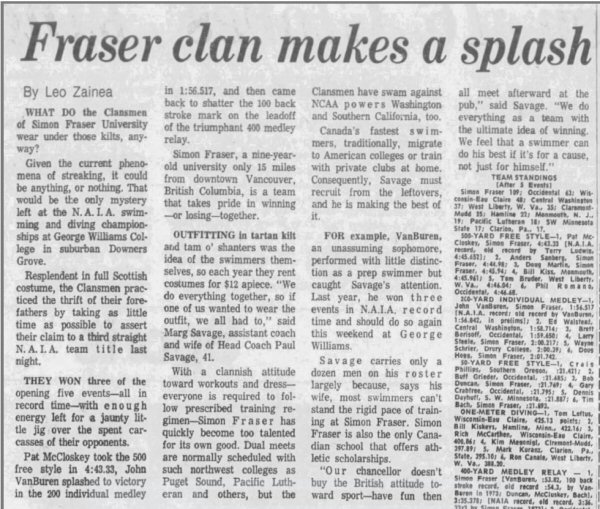
From the Sioux City, Iowa Newspaper - March 23, 1978
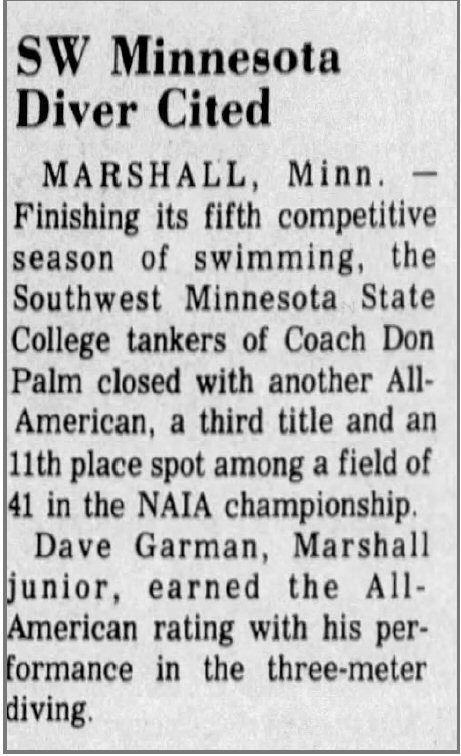
From the Winona, Minnesota Newspaper - January 14, 1973
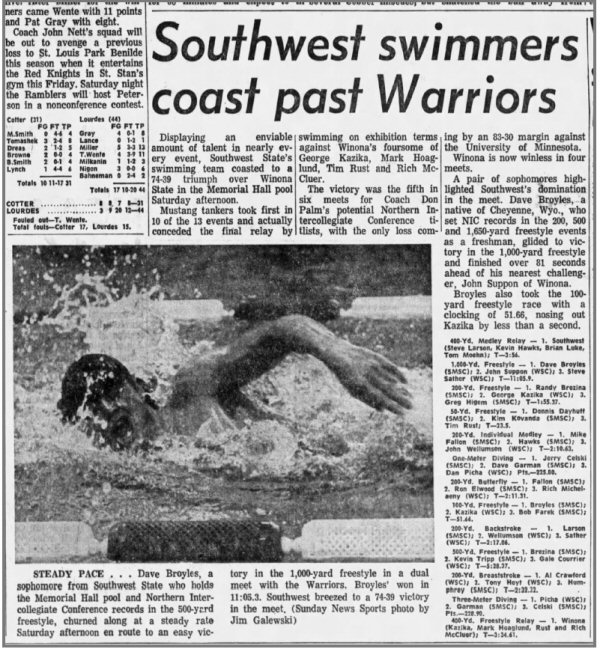
From the Winona, Minnesota Newspaper - March 2, 1972
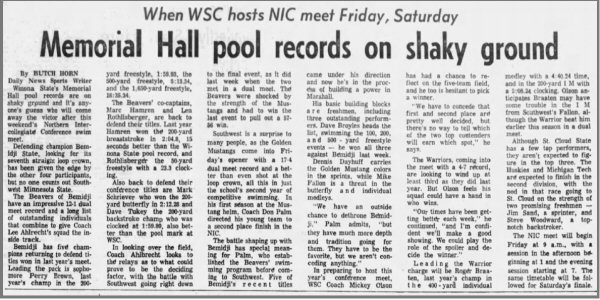
From the Minneapolis, Minnesota Newspaper - December 13, 1969
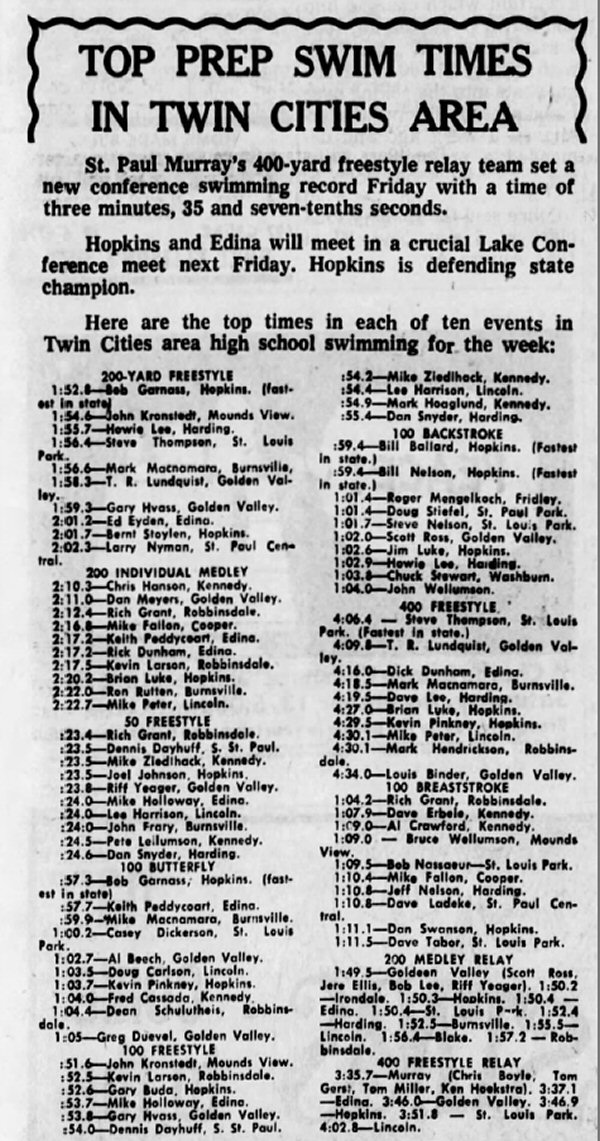
From the Bemidji, Minnesota Newspaper - February 8, 1975
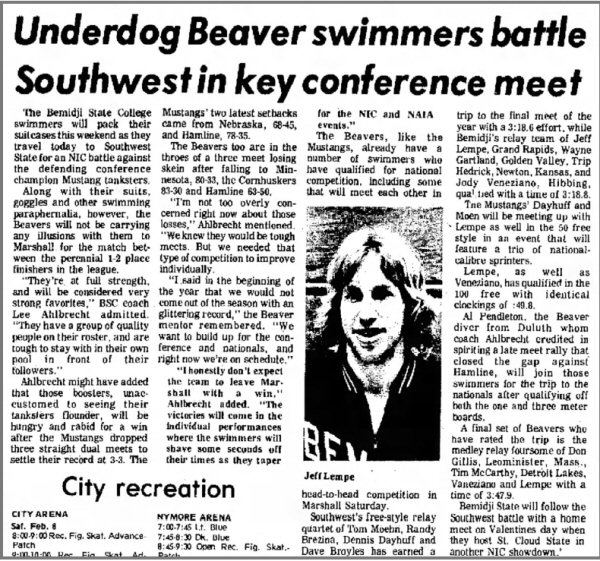
From the Bemidji, Minnesota Newspaper - February 4, 1977
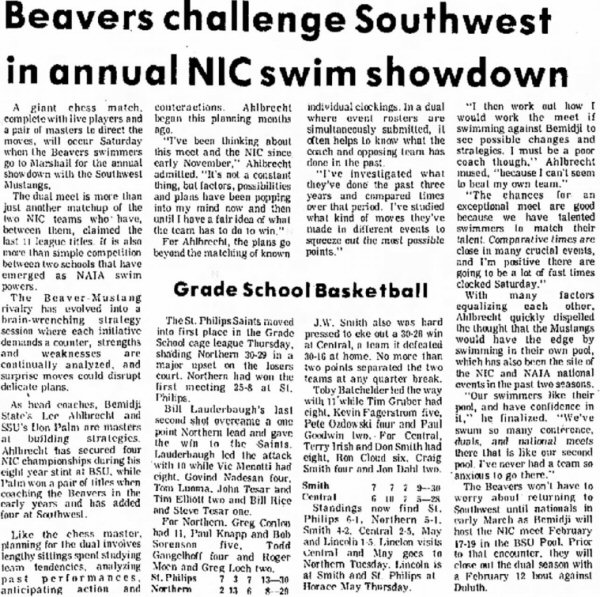
From the Winona, Minnesota Newspaper - January 14, 1972
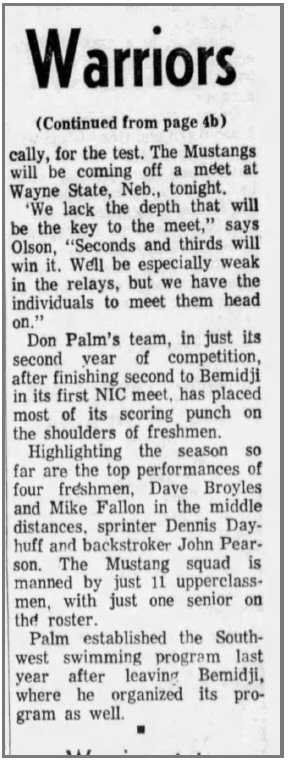
From the Fargo, North Dakota Newspaper - December 12, 1970
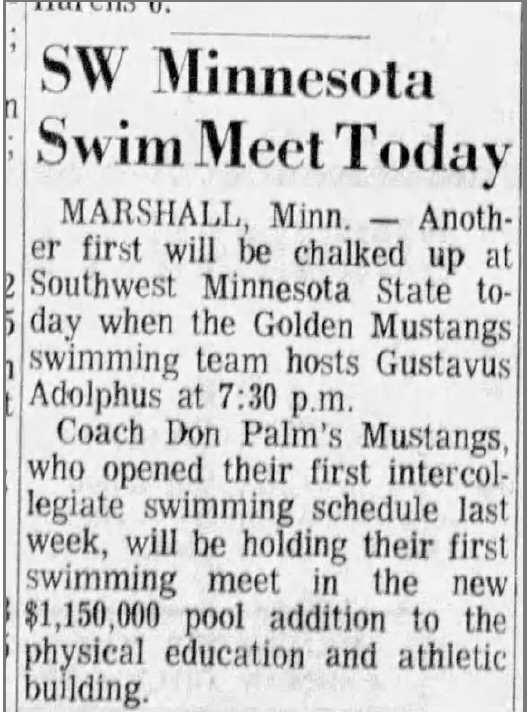
From the Berwyn, Illinois Newspaper - April 4, 1979
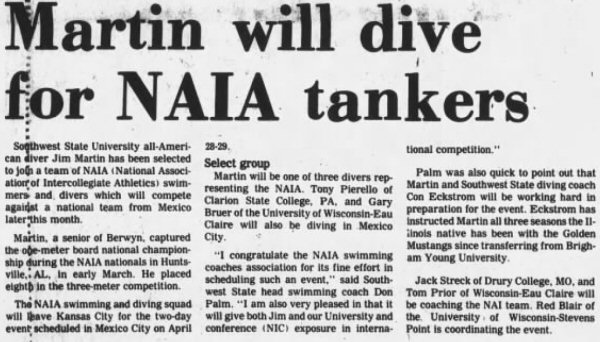
From the Berwyn, Illinois Newspaper - February 23, 1979
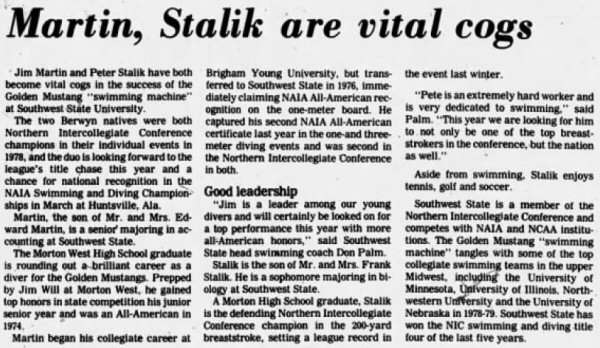
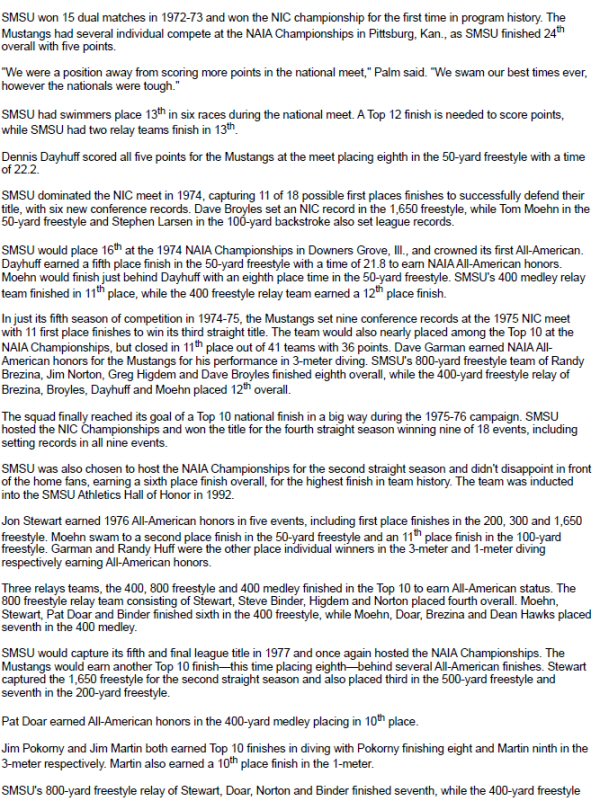
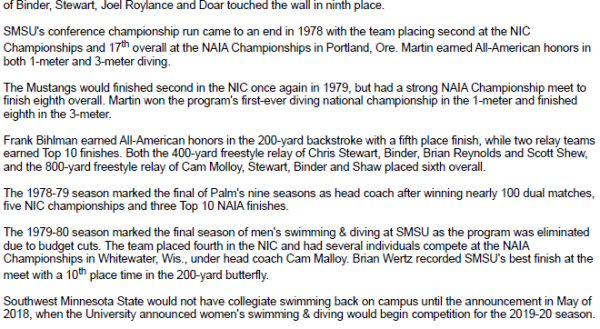
From the Southwest University Website - May 5, 2020
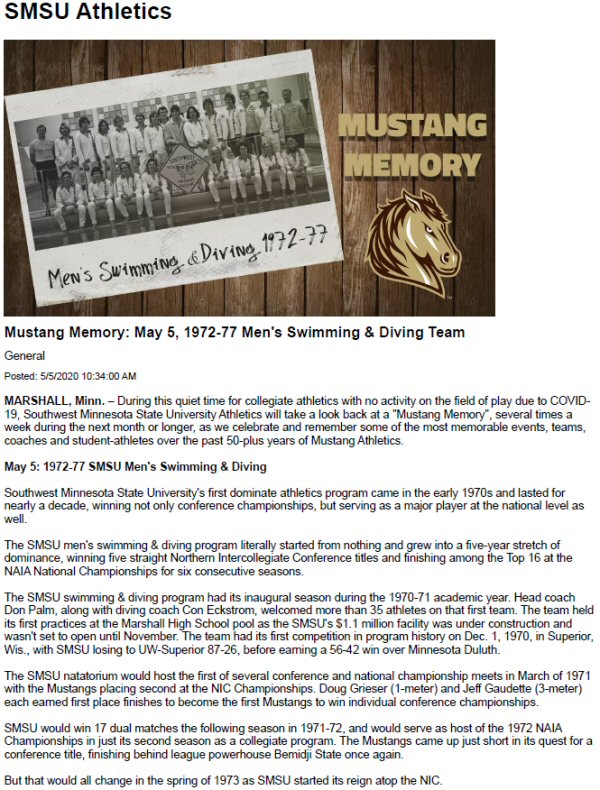
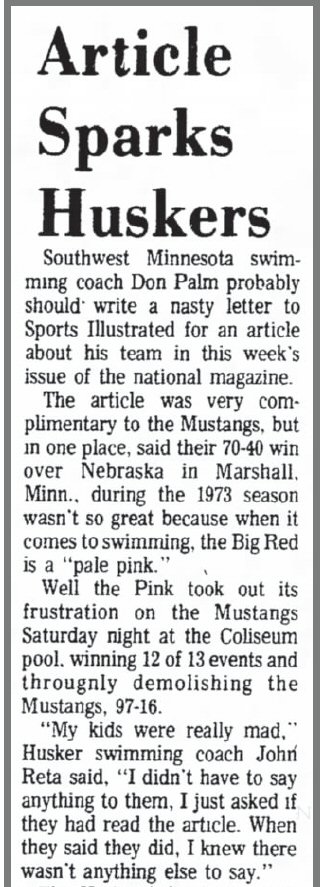
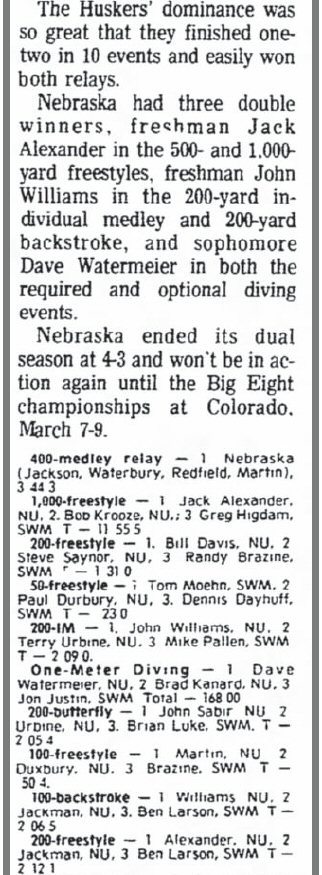
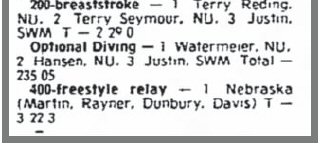
From the Lincoln, Nebraska Newspaper - February 17, 1974
From the Winona, Minnesota Newspaper - March 5, 1972
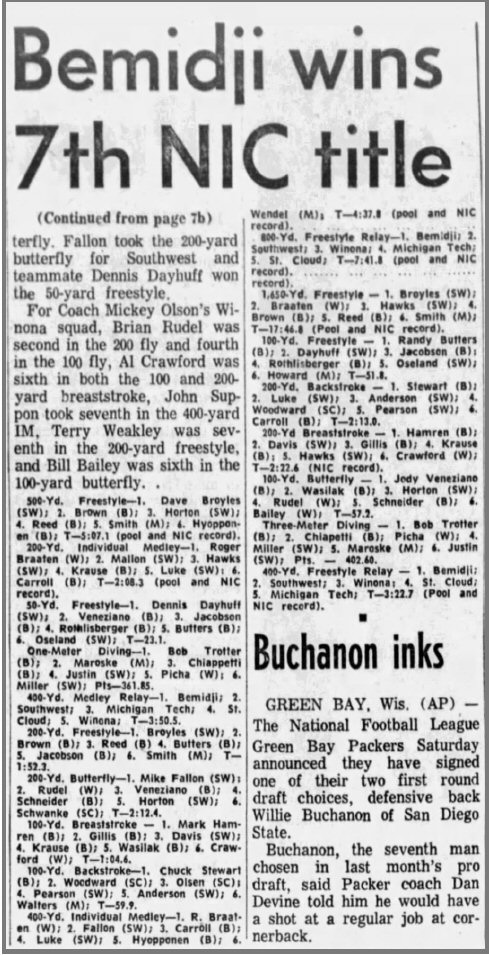
From the Winona, Minnesota Newspaper - March 5, 1972
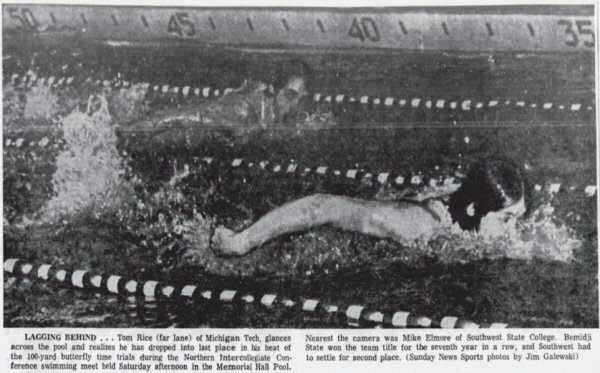
From the Winona, Minnesota Newspaper - March 5, 1972
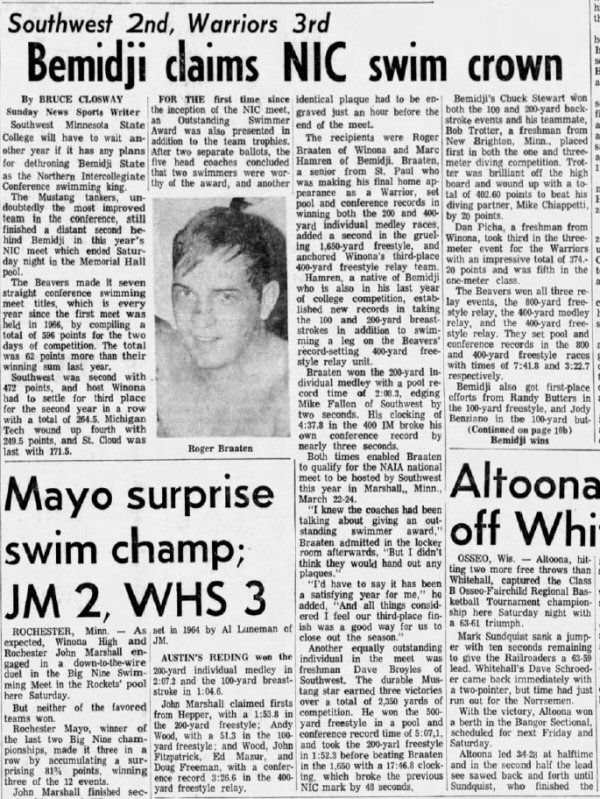
From the Cedar Rapids, Iowa Newspaper - February 10, 1974
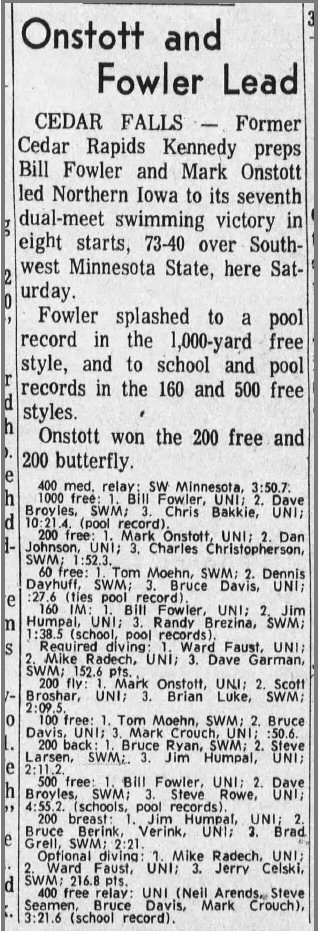
From the Omaha, Nebraska Newspaper - February 18, 1973
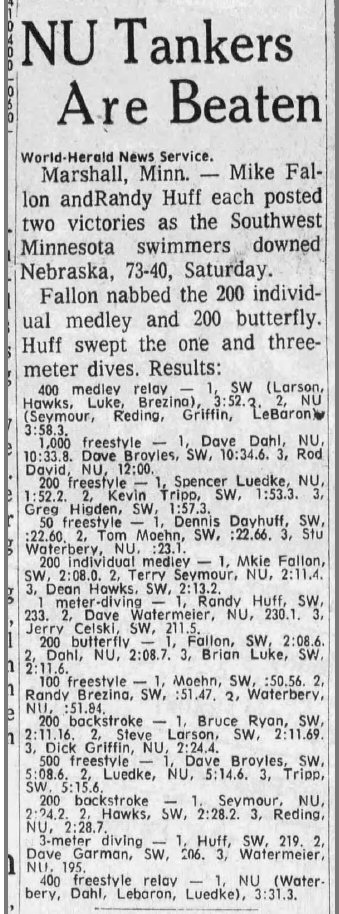
From the Fargo, North Dakota Newspaper - May 4, 1969
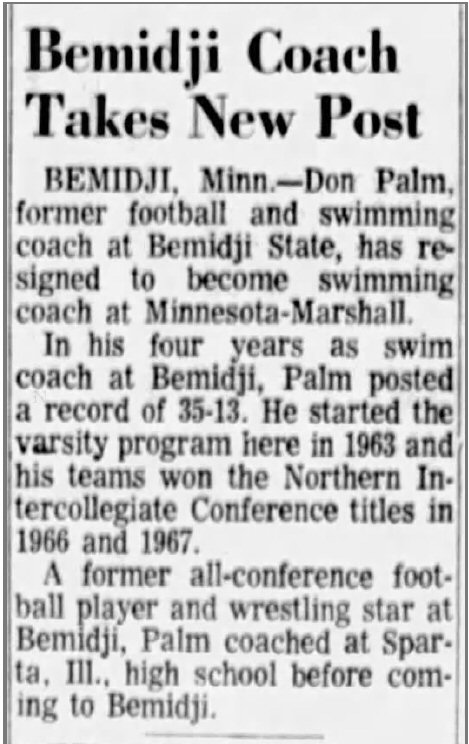
From the Berwyn, Illinois Newspaper - March 18, 1973
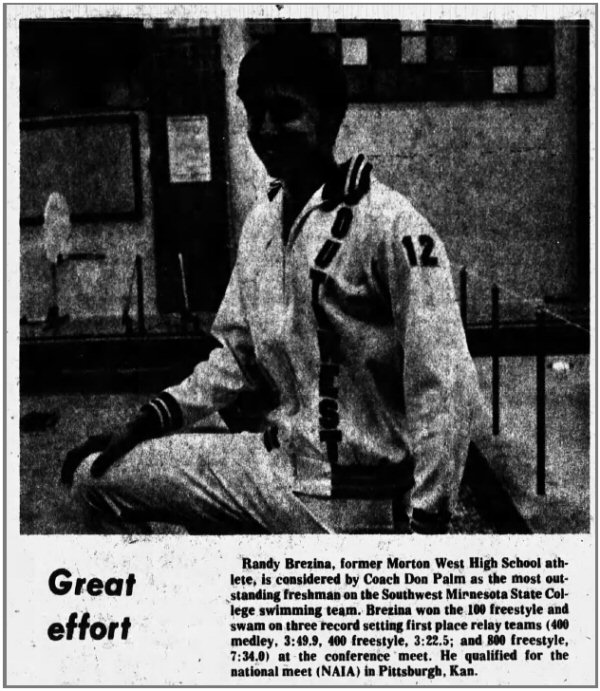
From the Anchorage, Alaska Newspaper - April 21, 1977
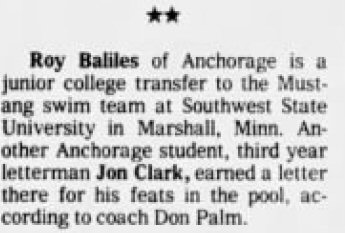
From the St. Cloud, Minnesota Newspaper - April 21, 1977
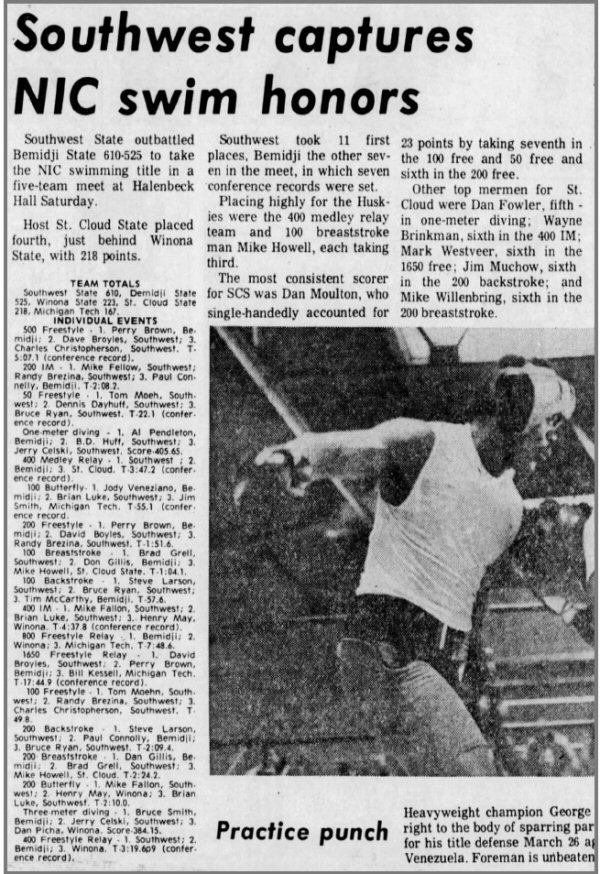
From the Winona, Minnesota Newspaper - March 5, 1973
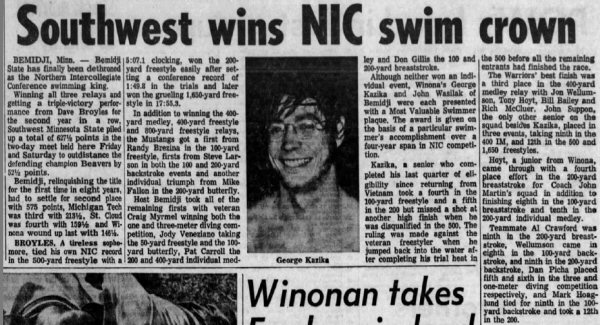
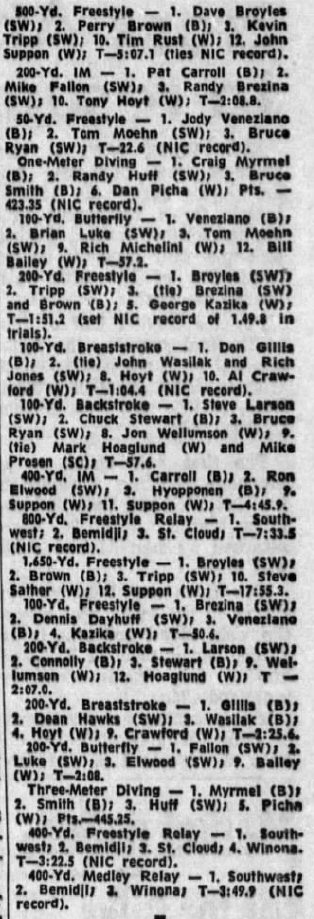
From the St. Cloud, Minnesota Newspaper - March 13, 1973
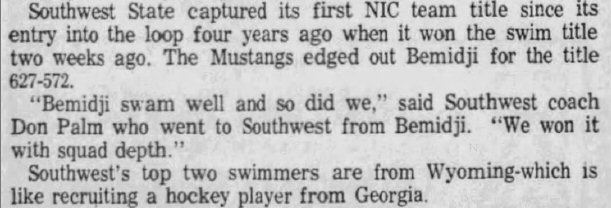
From the St. Cloud, Minnesota Newspaper - February 23, 1978
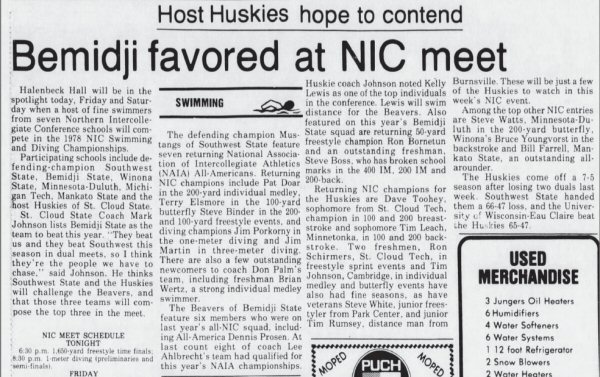
From the Sioux City, Iowa Newspaper - March 23, 1975
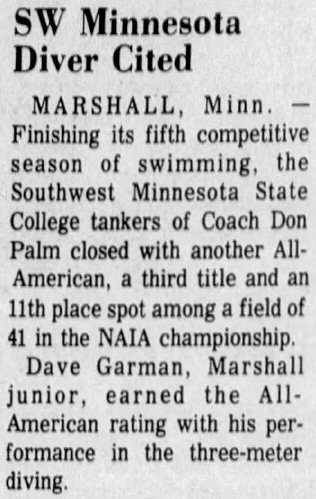
From the Duluth, Minnesota Newspaper - January 27, 1973
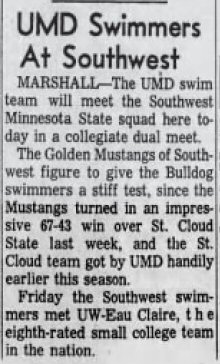
From the Duluth, Minnesota Newspaper - February 11, 1978
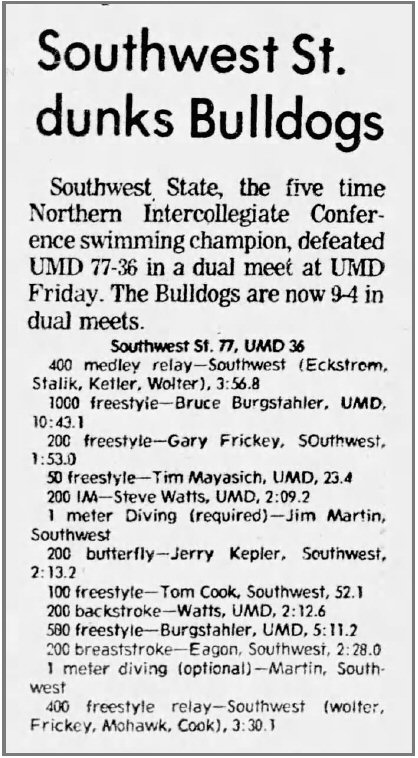
From the Bemidji, Minnesota Newspaper - February 20, 1974
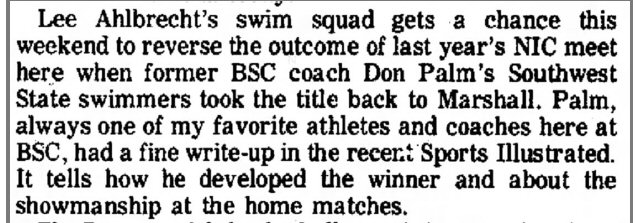
From the Bemidji, Minnesota Newspaper - March 2, 1972
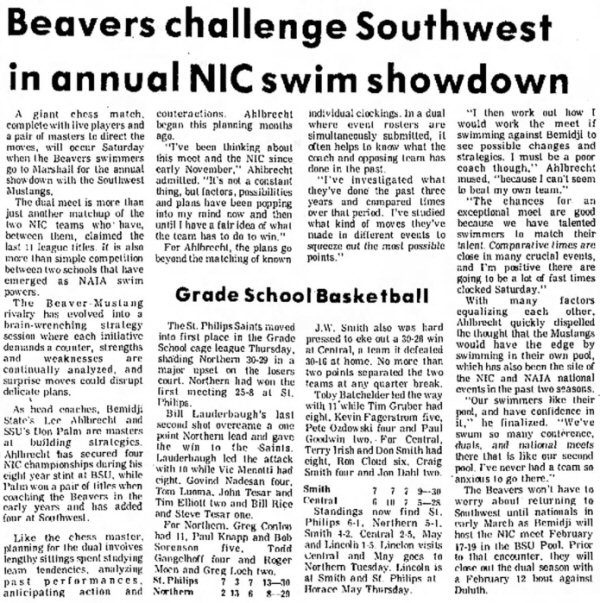
From the Winona, Minnesota Newspaper - January 12, 1973

From the Winona, Minnesota Newspaper - January 14, 1973
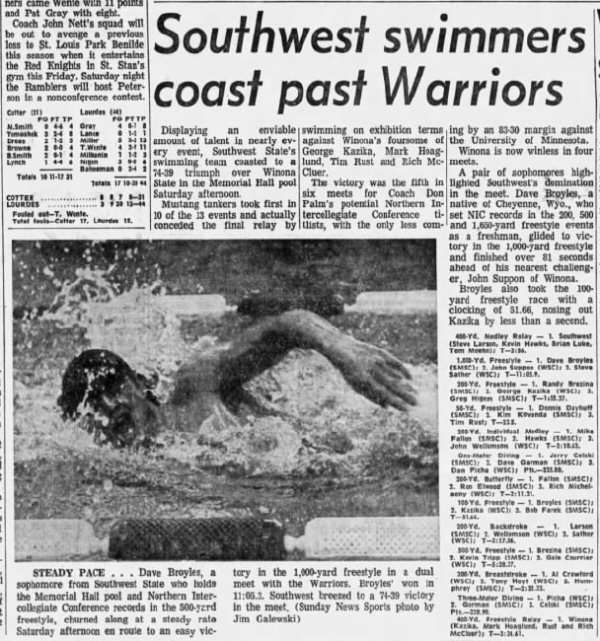
From the Duluth, Minnesota Newspaper - January 27, 1973
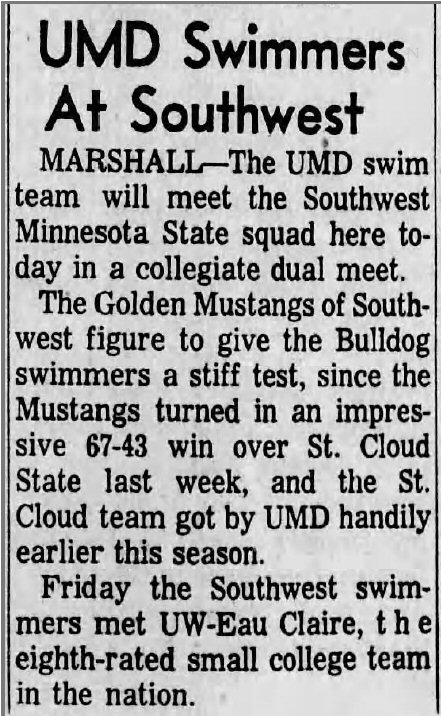
From the Winona, Minnesota Newspaper - December 13, 1973
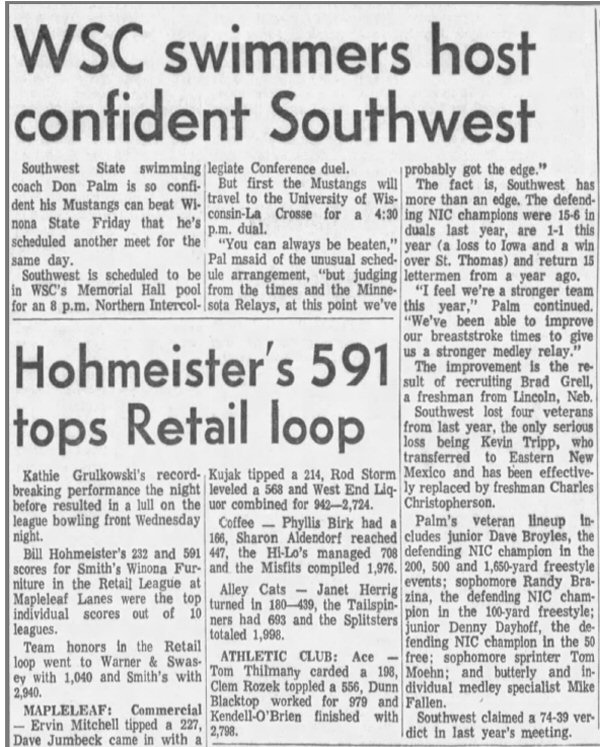
Brian Luke Article - Minneapolis Star Tribune - November 13, 2025
The Minnesota Star Tribune
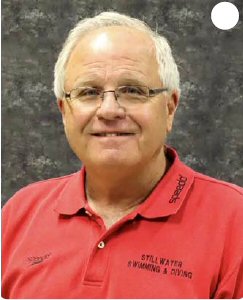
Not long after graduating from Southwest Minnesota State in 1975, Brian Luke received a phone call from the Stillwater school district. It was looking for a swim coach who could start immediately.
Luke, who had been an all-conference swimmer and national qualifier for three seasons at Southwest Minnesota State, accepted the job and started the following week. Fifty years later, he is still coaching the girls and boys swimming teams at Stillwater.
This week, Luke will conclude his 50th season as the Ponies girls coach as he has each of the previous 49 seasons - at the girls swimming and diving state meet. Stillwater advanced eight individuals and all three relay teams this year.
There's a shared timeline in place.
This year's meet, which begins Thursday at the University of Minnesota's Jean K. Freeman Aquatic Center, is the 50th anniversary of the first MSHSL-sponsored state meet. The first state meet was Nov. 21-22, 1975, and was held at Hamline University in St. Paul. Minnetonka won.
Luke coached the Ponies to a 20th-place finish at the first state meet, in 1975. "We had one swimmer, Sue Sherman, score 15 points in the 50 and 100 breaststrokes," Luke said.
Since that first meet, Luke has coached the Ponies, who have won 26 consecutive Class 2A, Section 4 titles, to four state titles. They were fourth at last year's Class 2A state meet.
"Winning four state titles is a cool memory," said Luke, who was elected to the MSHSL Hall of Fame in 2022. "But I've just enjoyed spending time with great kids who put forth their best every day."
Luke swam for Hopkins High School through his junior year. Bob Johnson was the head coach, and Brian's dad, Elmer Lukel was the assistant. Before Brian Luke’s senior year, Hopkins split into two high schools, Eisenhower and Lindbergh. Elmer Luke became the head coach at Lindbergh, and Brian Luke swam at Lindbergh during his senior year.
"My father was an assistant coach for 90 percent of my career," Brian Luke said, "from when I was nine years old until a junior in high school. I probably took more from Bob Johnson’s coaching. My dad was philosophical, so I kind of melded together what I learned from them. But a coach has to have his own personality. The worst thing a coach can do is copy someone."
Johnson, Brian Luke, Elmer Luke and Lloyd Luke - Brian Luke’s uncle - are all members of the Minnesota High School Swimming Coaches Association Hall of Fame.
Elmer Luke coached the Hopkins Lindbergh girls team to state titles in 1978 and 1979 and a state record of 124 consecutive dual-meet victories between 1973 and 1987.
During his tenure at Stillwater, Brian Luke’s teams surpassed Lindbergh's dual-meet winning streak with the assistance of Elmer Luke.
After Elmer Luke retired from Hopkins in 1996, he became a volunteer assistant to his son at Stillwater and continued in that role in 2015. Stillwater began its dual-meet winning streak in broke the Lindbergh record in 2015 . The Ponies dual-meet streak stands at 222.
The Ponies won their first state title in 2005 before winning state titles in 2006: 2008 and 2009. They have won the True Team state title seven times.
Between the girls and boys teams at Stillwater: Brian Luke has coached in 1,637 meets. In 2001, he got a commercial driver's license and started driving buses to transport his teams.
"Since I started in 1975," said Luke, who is retired from teaching middle school science, "I've enjoyed watching the great growth in all girls sports. They are great athletes: dedicated. I applaud them. I still enjoy coaching every day. What is exciting is when the kids surprise you."
Brian Luke’s coaching career
-
Stillwater Girls
- Dual meet record 429-55-5
- Conference titles 33
- Section titles: 26
- True Team section titles: 21
- True Team state titles: 7S
- State championships: 4
- State runner-up: 1
- Individual state champions: 27 (19 individual, 8 relays)
-
Stillwater Boys
- Dual meet record: 364-95-3
- Conference titles: 23
- Section titles: 17
- True Team section titles: 14
- Individual state champions: 14 (13 individual, 1 relay)
-
Combined
- Dual meet record: 793-150-8
- Individual state champions: 41 (32 individual, 9 relay)
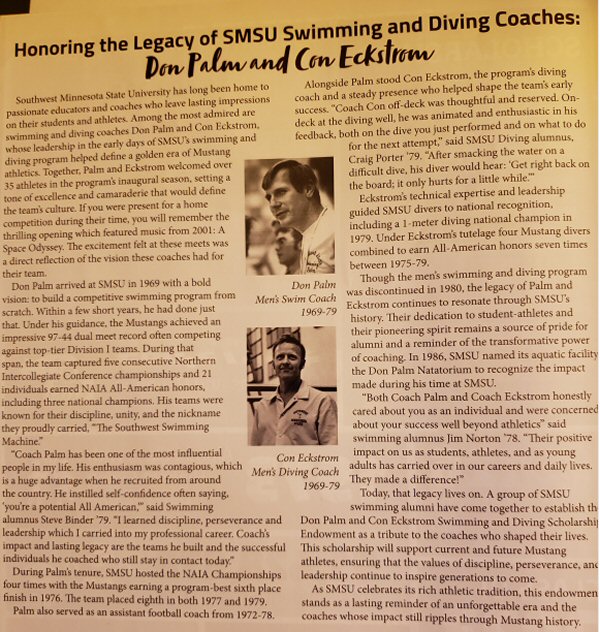
Swimming and Diving Scholarship Endowment Update
December 6, 2025
Honoring the Legacy of SMSU Swimming and Diving Coaches
Don Palm and Con Eckstrom
Southwest Minnesota State University has long been home to passionate educators and coaches who leave lasting impressions on their students and athletes. Among the most admired are swimming and diving coaches Don Palm and Con Eckstrom, whose leadership in the early days of SMSU’s swimming and diving program helped define a golden era of Mustang athletics. Together, Palm and Eckstrom welcomed over 35 athletes in the program’s inaugural season, setting a tone of excellence and camaraderie that would define the team’s culture. If you were present for a home competition during their time, you will remember the thrilling opening which featured music from 2001: A Space Odyssey. The excitement felt at these meets was a direct reflection of the vision these coaches had for their team.
Don Palm arrived at SMSU in 1969 with a bold vision: to build a competitive swimming program from scratch. Within a few short years, he had done just that. Under his guidance, the Mustangs achieved an impressive 97-44 dual meet record and captured five consecutive Northern Intercollegiate Conference championships. During that span, 21 individuals earned NAIA All-American honors, including three national champions. His teams were known for their discipline, unity, and the nickname they proudly carried, “The Southwest Swimming Machine.”
“Coach Palm has been one of the most influential people in my life. His enthusiasm was contagious, which is a huge advantage when he recruited from around the country. He instilled self-confidence often saying, ‘you’re a potential All American,’” said Swimming alumnus Steve Binder. “I learned discipline, perseverance and leadership which I carried into my professional career. Coach’s impact and lasting legacy are the teams he built and the successful individuals he coached who still stay in contact today.”
During Palm’s tenure, SMSU hosted the NAIA Championships four times with the Mustangs earning a program-best sixth place finish in 1976. The team placed eighth in both 1977 and 1979.
Palm also served as an assistant football coach from 1972-78.
Alongside Palm stood Con Eckstrom, the program’s diving coach and a steady presence who helped shape the team’s early success. “Coach Con off-deck was thoughtful and reserved. On-deck at the diving well, he was animated and enthusiastic in his feedback, both on the dive you just performed and on what to do for the next attempt,” said SMSU Diving alumnus, Craig Porter. “After smacking the water on a difficult dive, his diver would hear: ‘Get right back on the board; it only hurts for a little while.’”
Eckstrom’s technical expertise and leadership guided SMSU divers to national recognition, including a 1-meter diving national champion in 1979. Under Eckstrom’s tutelage four Mustang divers combined to earn All-American honors seven times between 1975-79.
Though the men’s swimming and diving program was discontinued in 1980, the legacy of Palm and Eckstrom continues to resonate through SMSU’s history. Their dedication to student-athletes and their pioneering spirit remains a source of pride for alumni and a reminder of the transformative power of coaching. In 1986, SMSU named its aquatic facility the Don Palm Natatorium to recognize the impact made during his time at SMSU.
“Both Coach Palm and Coach Eckstrom honestly cared about you as an individual and were concerned about your success well beyond athletics” said swimming alumnus Jim Norton. “Their positive impact on us as students, athletes, and as young adults has carried over in our careers and daily lives. They made a difference!"
Today, that legacy lives on. A group of SMSU swimming alumni have come together to establish the Don Palm and Con Eckstrom Swimming and Diving Scholarship Endowment as a tribute to the coaches who shaped their lives. This scholarship will support current and future Mustang athletes, ensuring that the values of discipline, perseverance, and leadership continue to inspire generations to come.
As SMSU celebrates its rich athletic tradition, this endowment stands as a lasting reminder of an unforgettable era and the coaches whose impact still ripples through Mustang history.
SMSC Impact Newspaper Articles
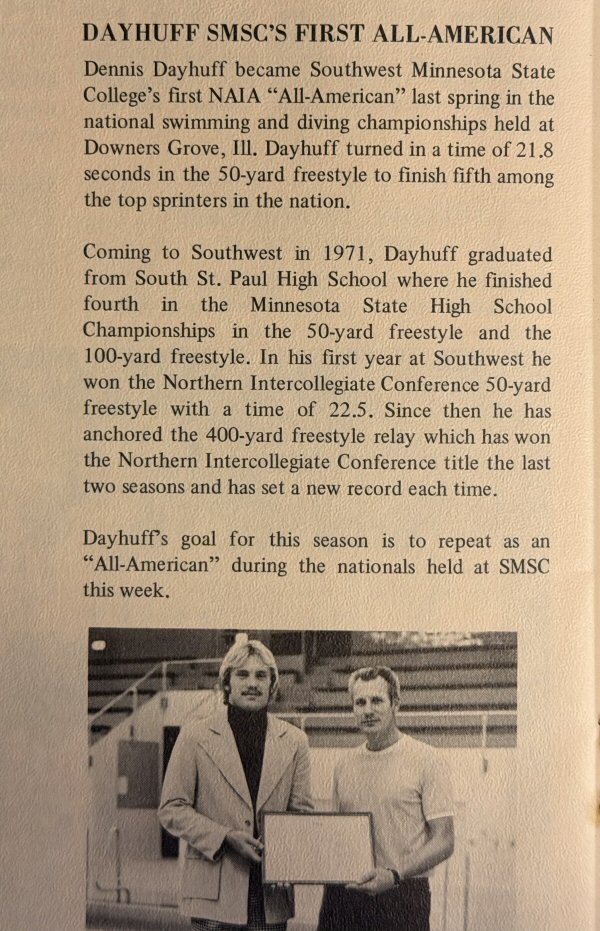
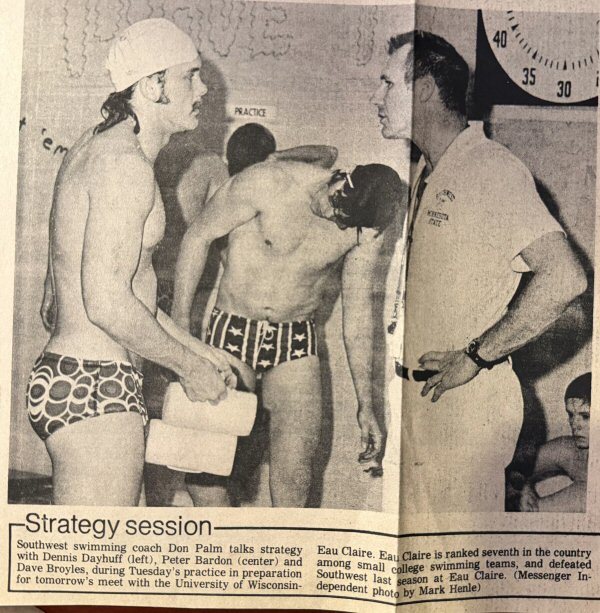
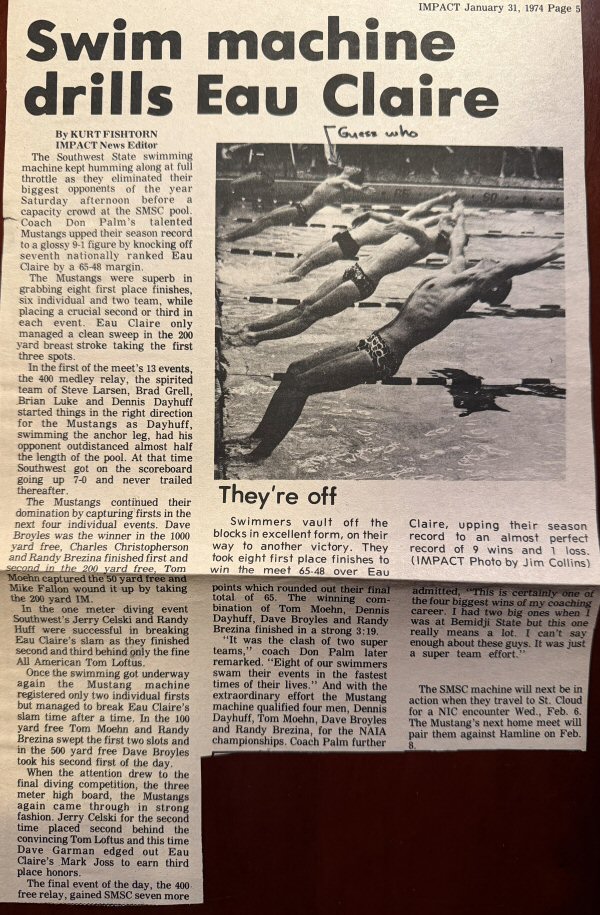
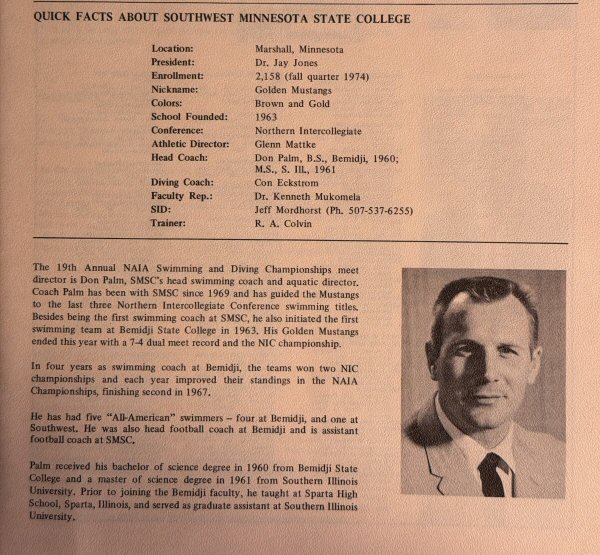
SMSC Quick Facts
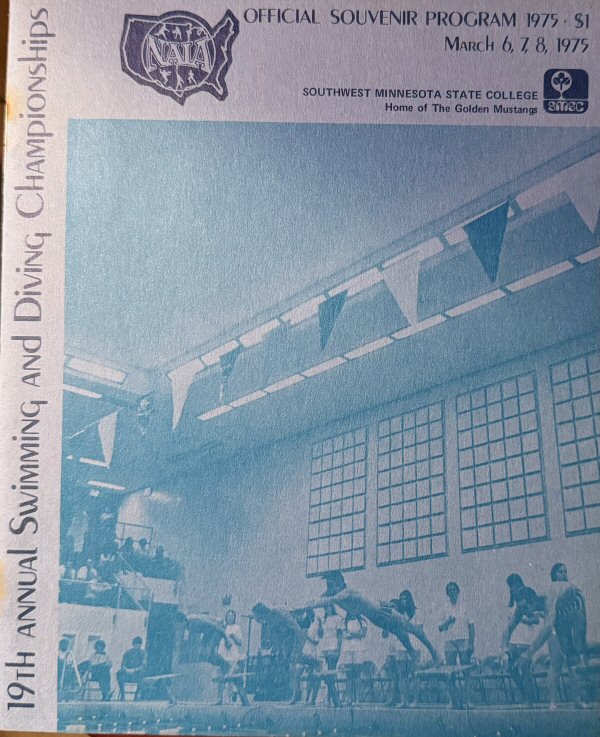
1975 NAIA Nationals Program Cover
January 28, 1974 - Newspaper Articles
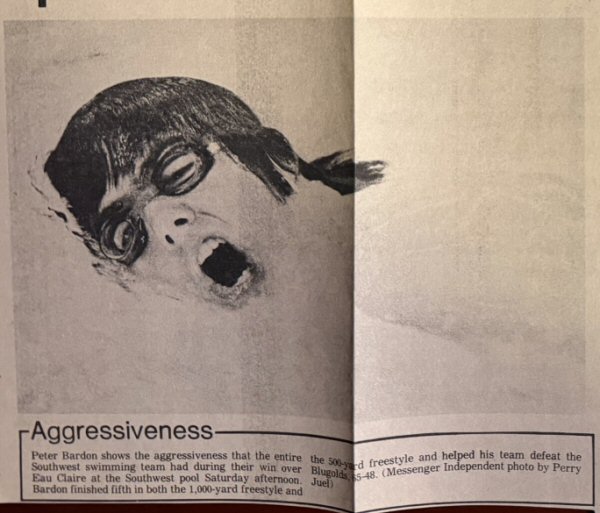
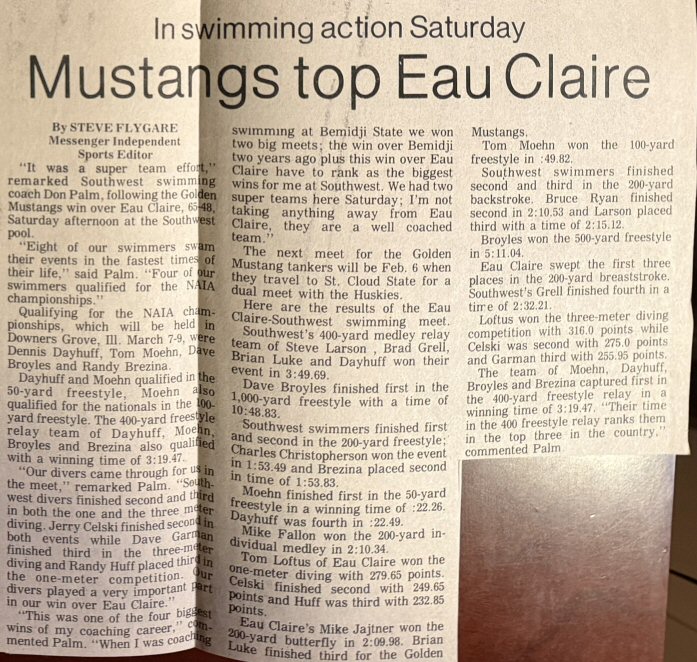
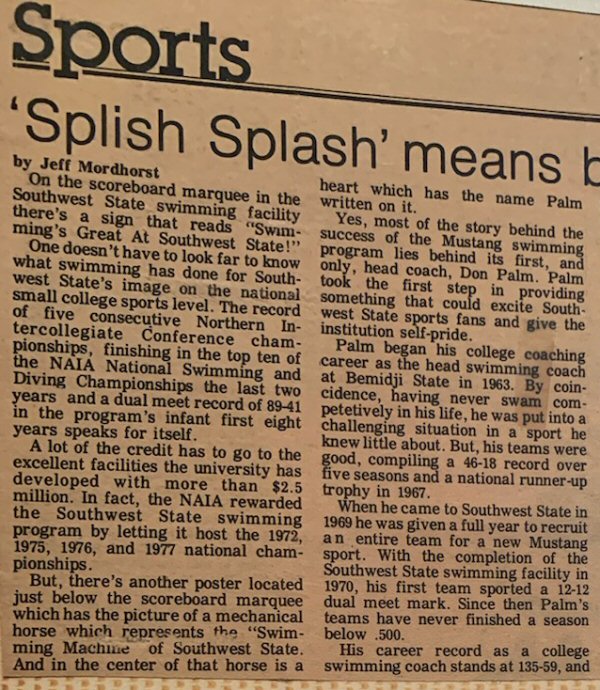
Coach Palm NIC Article
Swimming Scholarship Endowment Article
From the Bench of Coach Palm
From the Bench of Coach Palm
Campus wildlife story from the student newspaper
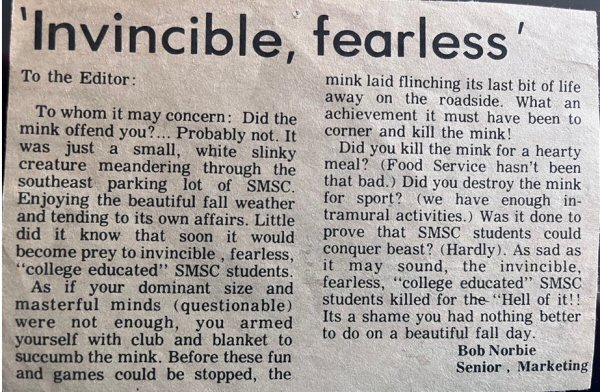
Interesting Story, Gary Horton and I, working together putting a starter in my car and this white thing ran by us and all we could think of was that it was a rat, not realizing that it was a mink and somebody was watching out of HA1 or HA4.
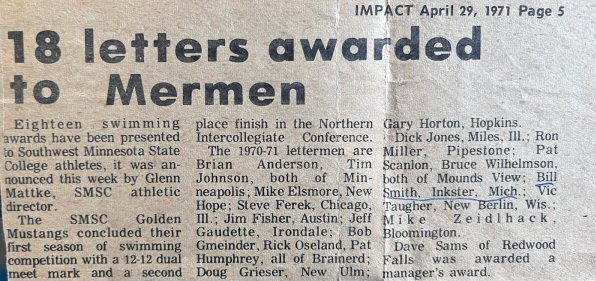
First Varsity Lettermen
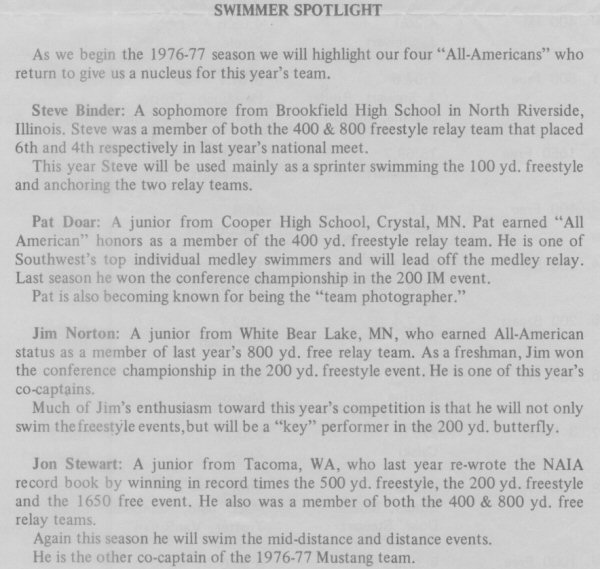
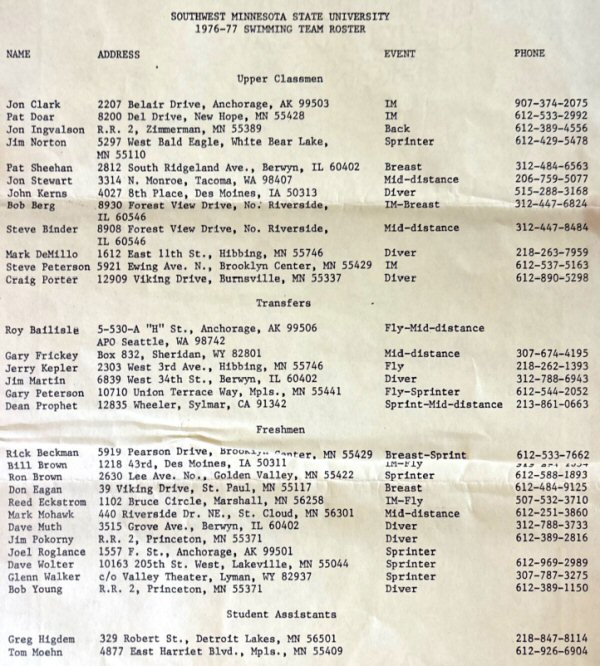
1976-1977 Pre-Season Team Roster
(Will calling these numbers still connect to Potential All-Americans?)
1970-71 First Team Roster
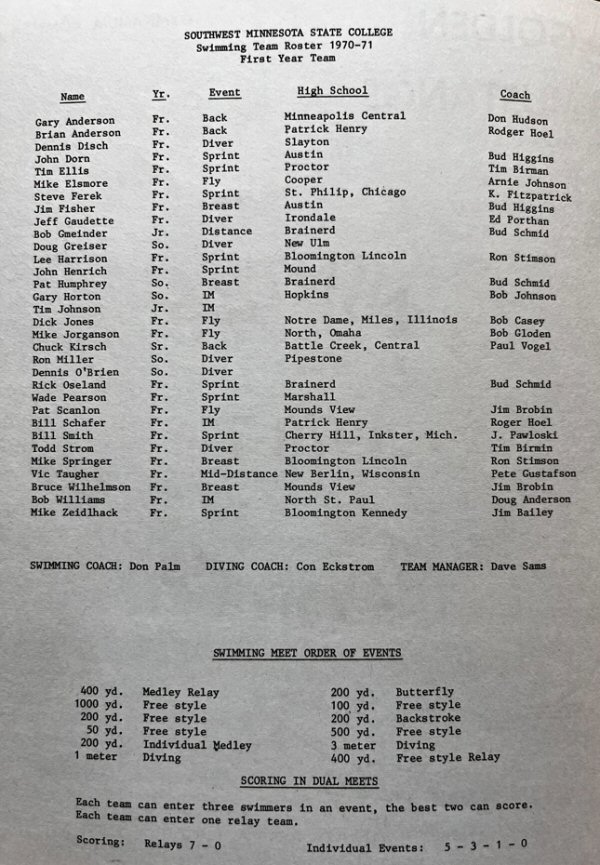
1970-71 First Team Roster
Preseason letter sent out by Coach Palm in July or August of 1970